Big talks happen at the annual United Nations (UN) Climate Change Conference of the Parties (COP), where countries can demonstrate commitment and accountability in climate action. But as extreme weather events become more frequent and global temperatures and sea levels continue to rise, the need to involve all levels of society through a bottom-up approach also becomes more urgent.
The fight for the planet is a fight for survival, and every second counts. For big talks to make a big difference, grassroots-level action is key.
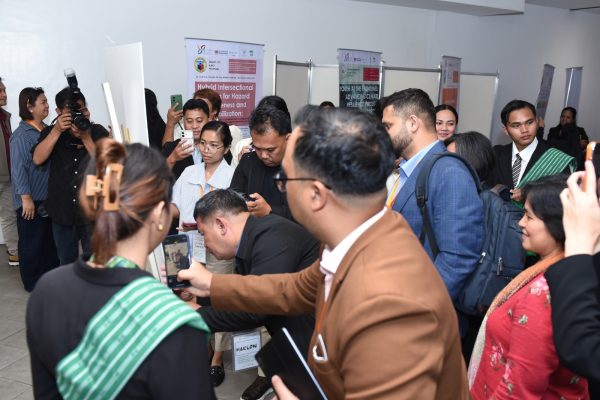
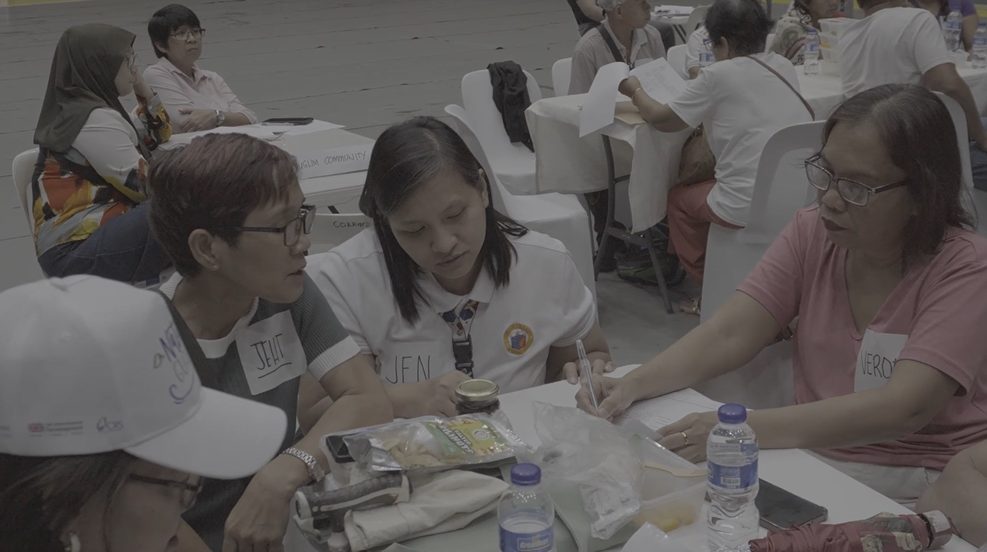
Aimed to bring the global climate talks closer to home, the Town Hall COP—a locally organized, community-driven event inspired by the UN COP—puts communities at the center stage of climate action planning. Communities decide on the priorities and agenda according to their lived realities of climate change, with their insights being integrated into the plans of their local government.
In the Philippines, four cities conducted Town Hall COPs in March 2026 to gather community-based solutions on making the city’s resilience strategies more inclusive for its vulnerable sectors.
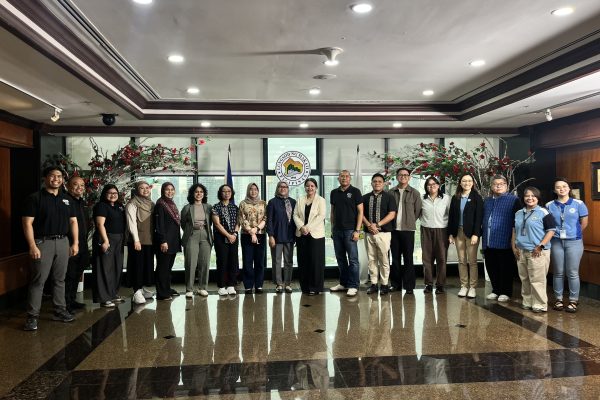
The city governments of Antipolo, Legazpi, Gingoog, and Parañaque invited their target communities and sectors to be part of the planning for projects designed to strengthen existing resilience strategies. The projects were specifically developed for identified vulnerable sectors in the cities as part of their participation in the Enhancing Local Capacities in Socially Inclusive Resilience in Asia (SIRA) Project.
Funded by UK Aid through the Foreign Commonwealth and Development Office (FCDO) and the International Development Research Centre, Canada through the Climate Adaptation and Resilience (CLARE) programme, the SIRA Project aims to identify and address the immediate capacity needs of local governments in pursuing climate action that is inclusive and sustainable through a capacity strengthening programme. It is implemented by the ICLEI Southeast Asia (SEA) and South Asia Secretariats in four Asian countries: Bangladesh, Indonesia, Nepal, and the Philippines.
The SIRA Project in the Philippines is implemented through the Socially Inclusive Resilience Leadership Program, which brought together SIRA fellows—local government staff from key offices involved in resilience planning and implementation—for a 9-month-long hybrid capacity building program in inclusive climate resilience.
After the training sessions, the SIRA fellows drafted a capstone project concept on socially inclusive resilience, which was further developed with their communities through a Town Hall COP.
In their Town Hall COPs, the four Philippine cities introduced their project concepts and gathered insights from relevant sectors, engaging them as partners and ensuring that their socioeconomic realities are addressed.
ICLEI SEA staff supported the Town Hall COPs in these cities by conducting short introductory sessions about nature-based solutions (NbS), helping community members understand and consider NbS as they discuss the proposed resilience solutions.
Antipolo City: Nature-based solutions to extreme urban heat
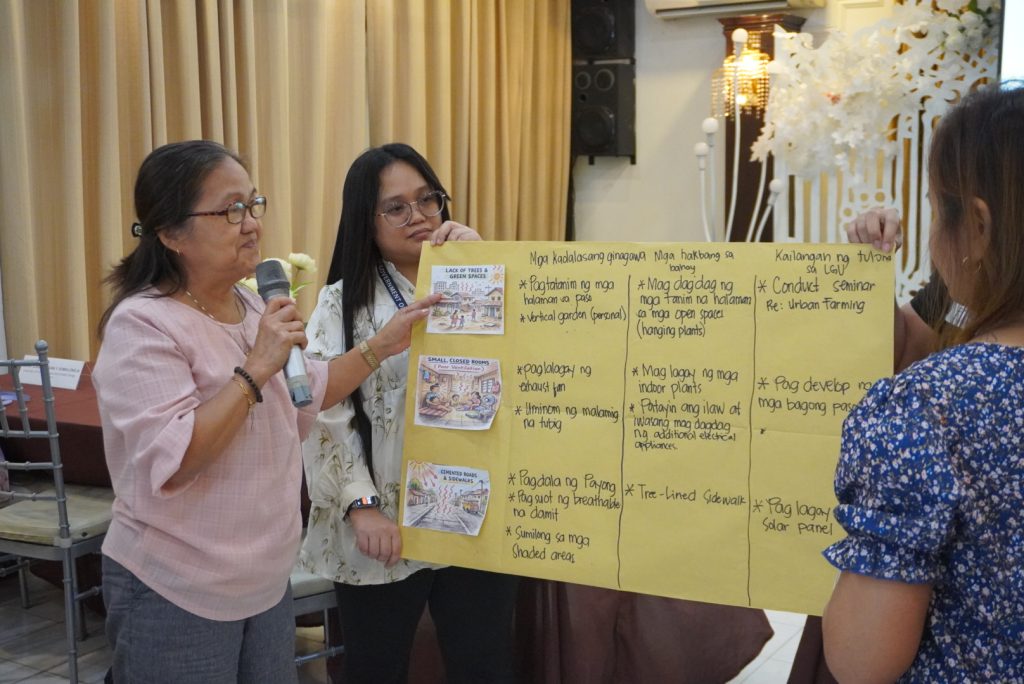
SIRA fellows of the Antipolo City Government invited homeowners associations (HOAs) in identified barangays (villages) with lower-income households last March 4, 2026 in a Town Hall COP.
The fellows gathered the HOAs to conduct a baseline assessment on their proposed project that aims to address extreme urban heat through nature-based solutions (NbS). The assessment included three main activities designed to facilitate active discussions among participants and allow them to share their experiences on extreme heat.
First, a participatory mapping activity saw HOA members drawing houses to identify the areas and times of day where they feel the most heat.
Second, in a plenary activity, participants also identified environmental or physical factors outside their homes that either worsen or help them cope with the heat.
The last activity involved illustrated cards that visualize heat-related problems in a community. Participants were asked to choose the top problems in their area and write the solutions they practice in their homes to address it, as well as their ideas on how the local government can help further address the problem.
“By recognizing that climate risks are experienced unevenly, we aim to empower residents as partners in development and stewards of their own resilience, fostering equitable and sustainable outcomes for the city,” said Marizajiell Galang, RPF, Project Evaluation Officer II of the Antipolo City Planning and Development Office and one of the SIRA fellows.
Antipolo City Councilor Lorenzo Juan Sumulong III, who chairs the city’s Committee on Environment and Climate Change Adaptation, expressed the city’s message of support during the Town Hall COP.
“We proudly support ICLEI and the SIRA Project because it is aligned with Antipolo’s obligation to our downstream communities and addressing our climate resilience,” he said.
Legazpi City: Inclusive early warning system in barangays
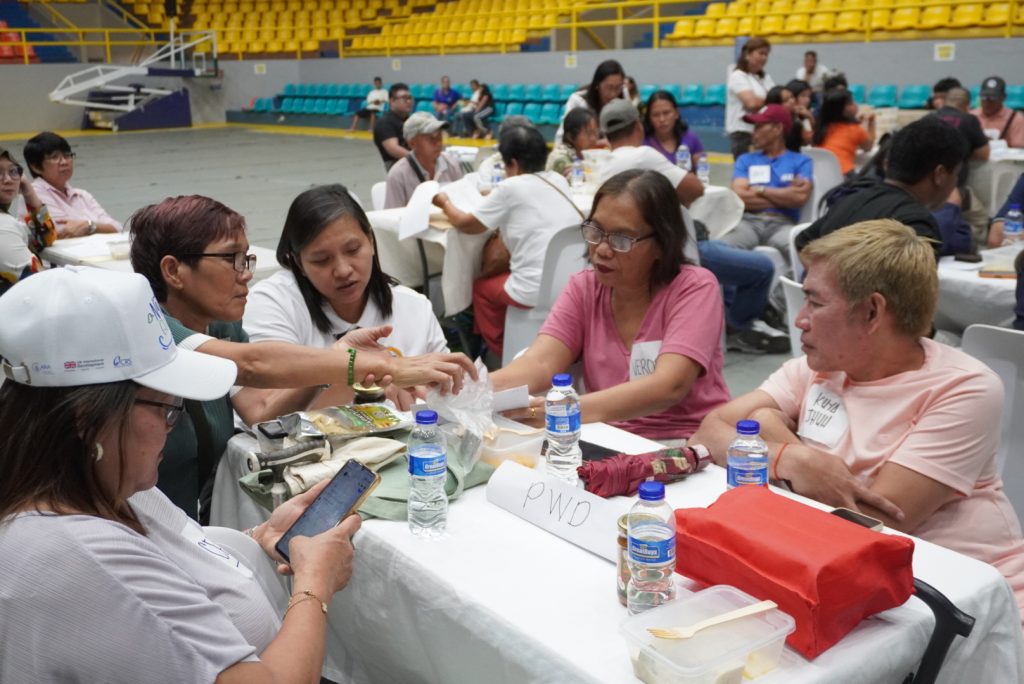
Meanwhile, in Legazpi City, 10 sectors were invited to participate in their Town Hall COP. These sectors were identified by the SIRA fellows of the Legazpi City Government as groups in the community whose ideas and experiences will help improve the inclusivity of the city’s existing Early Warning Systems (EWS) in its barangays.
The following communities were represented in the Town Hall COP held last March 19, 2026, which aimed to conduct a community assessment of the city’s EWS: persons with disabilities (PWD), pregnant and lactating mothers, women and children, youth, solo parents, low-income households/individuals, farmers, fisherfolk, senior citizens, and the Muslim community.
“Inclusive resilience is crucial because disasters don’t hit everyone the same way—those who are already vulnerable often face the biggest risks. By making sure our strategies are grounded in diversity and equity, we can strengthen our entire community,” said Engr. Miladee Azur, GE, EnP, MCDRM, Head of the Legazpi City Disaster Risk Reduction and Management (DRRM) Office and a SIRA fellow.
The SIRA fellows designed a scorecard or questionnaire for participants to assess their barangay’s EWS based on given inclusivity criteria. The Inclusive Barangay EWS Scorecard includes guide questions, rating scales, checklists of haves and have-nots, and a column for participants to write down their suggested improvements. The accomplished scorecards were then discussed in a plenary.
“As the head of DRRM and [Climate Change Adaptation], I believe our role goes beyond just building infrastructure. It’s about empowering communities, elevating the voices of women, youth, and marginalized groups, and blending indigenous knowledge with modern science,” said Azur.
Gingoog City: Climate-adaptive housing for a coastal barangay
The Gingoog City Government identified Barangay 18-A, Purok 7-2 as one of its most climate-vulnerable neighborhoods. Based on the city’s data, the coastal neighborhood is home to vulnerable social sectors: almost a third of its population are children, while 27% are women.
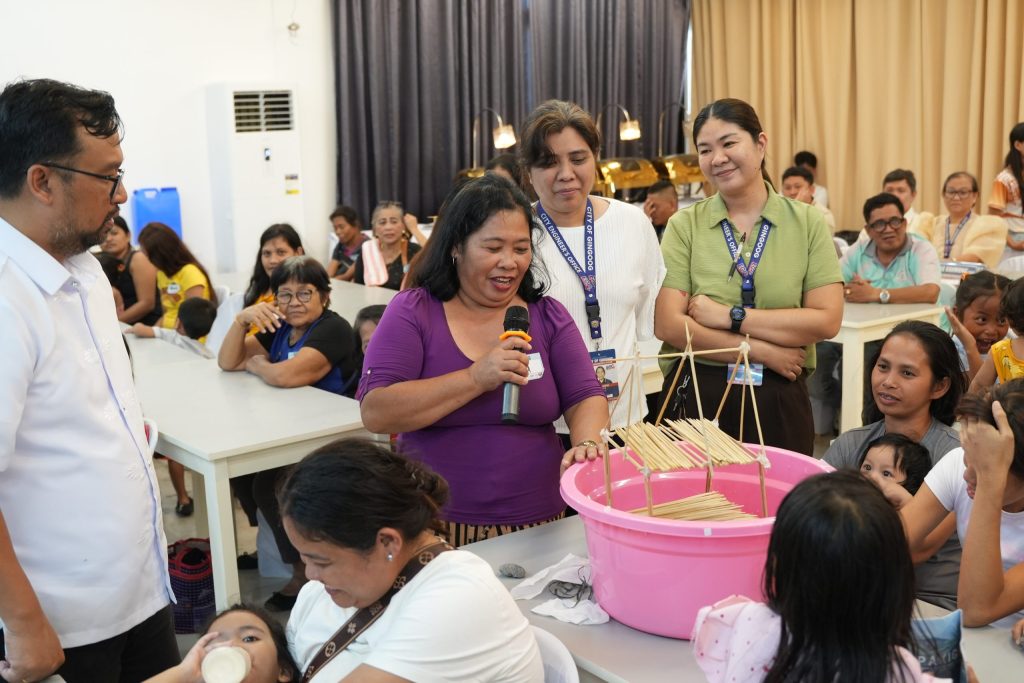
For the city’s Town Hall COP, the SIRA fellows of Gingoog invited residents from Purok 7-2 to co-design their proposed modular climate-adaptive housing last March 23, 2026. The design aims to be an inclusive housing solution to lessen the frequency of emergency evacuations and socioeconomic impacts caused by tide rise and coastal flooding.
Gingoog City first presented its proposed design, which features elevated, expandable units integrated with mangrove buffers and shared infrastructure, and aims to incorporate universal design for accessibility and affordability. Participants were then asked to share the features they wanted the house to have by making a miniature model, which also helped them visualize how the housing would be constructed.
Marlon Pajo, Gingoog City Disaster Risk Reduction and Management Officer and SIRA fellow, said that the city prioritizes vulnerable communities in terms of resilience planning, as they have previously experienced how difficult it is to relocate residents and families who face loss of livelihood and economic displacement when they are uprooted from their homes.
Parañaque City: Solar microgrid-powered early warning system
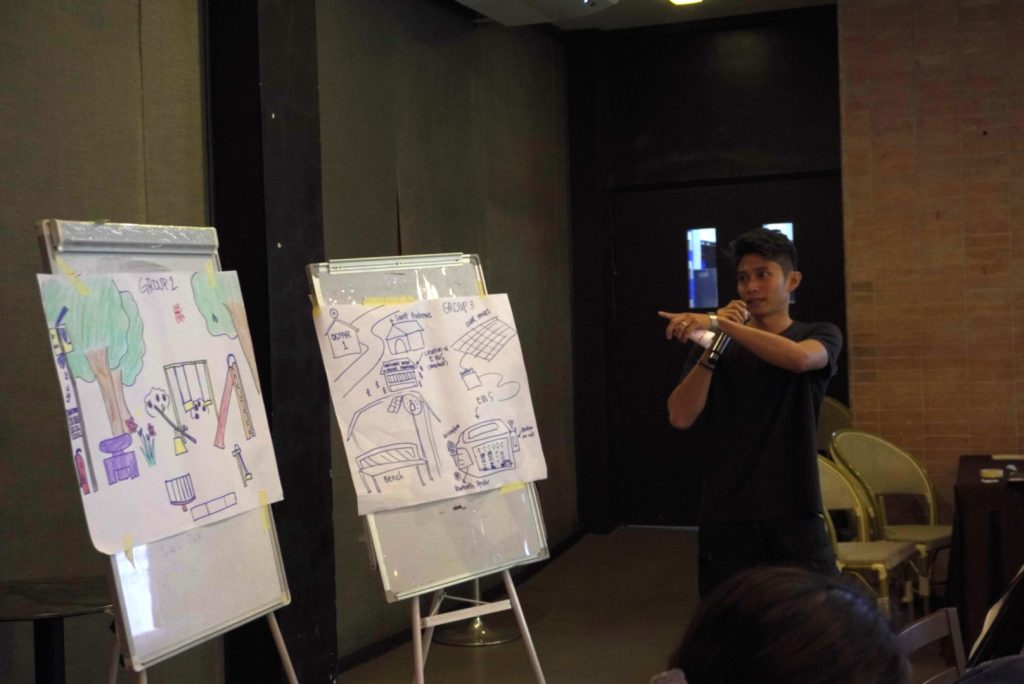
For SIRA fellows of the Paranaque City Government, they intended their Town Hall COP last March 31, 2026 to be a co-designing event with communities.
The SIRA fellows first introduced their proposed project: an audible EWS housed in waiting sheds that will also serve as small, green public spaces and charging stations. For the co-designing session, the Town Hall COP participants were asked to imagine the proposed EWS and green space, and draw a version of it with features that will benefit their respective communities. They also suggested possible locations where the EWS can be established.
Before the co-designing activity, participants were asked to share their insights and experiences through a questionnaire on how community participation in local climate action planning can be improved to be more inclusive; the efforts being done by their communities related to adaptation and mitigation and how the local government can support them; and what an inclusive future means to their communities.
“I’ve always believed that climate risks don’t affect everyone the same way, which is why pushing for inclusive resilience in Parañaque is important to ensure that our risk reduction measures cover all members of the community and are grounded in actual data and local realities, particularly the communities’ vulnerability and other unique profiles,” said Shane Gallego, Officer-in-Charge of the Parañaque City DRRM Office Standards and Policy Development Section and a SIRA fellow.
Communities as partners in resilience
In a Town Hall COP, the Paris Agreement’s commitment to limiting global temperature rise to 1.5 degrees Celcius may not readily resonate with communities. However, lived realities such as stories of how homes with no access to air-conditioning cope with extreme heat and how a family with elderly or PWD members prepares for a forecasted typhoon are able to better illustrate the urgent stakes of climate action. These diverse experiences reveal not just what should matter most to local resilience plans, but also how capable communities are as partners in climate action.
From the experiences of the four Philippine cities in conducting their Town Hall COPs, it is evident how these gatherings are opportunities for local governments to directly partner with communities they serve—communities who have been making themselves resilient in the ways that they know, and whose knowledge from lived experiences may be the key to making small but steady steps towards a more resilient and inclusive future for all.
Like Antipolo, Legazpi, Gingoog, and Parañaque, there is still time for cities to listen.
Watch some of the Town Hall COP highlights from these cities below: