Malaysia federal agencies, Melaka state government institutions, and Melaka local authorities met on 5 October 2026 in Putrajaya to discuss how Malaysia’s existing building energy-efficiency framework could be more effectively translated in state planning and local implementation.
Convened by ICLEI Southeast Asia under the RENEW-SEA project, the Multi-level Dialogue: Strengthening Positive Energy Buildings in Melaka brought together representatives from the Ministry of Energy Transition and Water Transformation (PETRA), PLANMalaysia Melaka, Melaka Green Technology Corporation (MeGTC), Sustainable Energy Development Authority (SEDA) Malaysia, Energy Commission (ST) Malaysia, Malaysian Green Technology and Climate Change Corporation (MGTC), Historical Melaka City Council (MBMB) and Hang Tuah Jaya Municipal Council (MPHTJ).
The dialogue revolved around the implementation of MS 1525, Malaysia’s standard on energy efficiency and renewable energy use for non-residential buildings, and on how energy-efficient and Positive Energy Building (PEB) principles could be considered in relation to the Melaka State Structure Plan 2040. The discussion was designed to examine practical policy, institutional, and implementation considerations at the state and local levels.
Opening the event, ICLEI Southeast Asia Regional Director Victorino Aquitania underscored the need to connect existing standards with the institutions and processes responsible for putting them into practice.
“The question is how existing standards, planning instruments, institutional responsibilities, and approval processes can work together more effectively,” Aquitania said.
Participants discussed how building energy performance can be addressed at different stages of a building’s life cycle. For new developments, conversations covered the possible role of planning and development approval processes in establishing energy-performance requirements before construction. For existing buildings, the discussion covered energy audits, monitoring, energy management, retrofits and renewable-energy measures.
The dialogue also surfaced broader implementation considerations, including the technical capacity and staffing available within local authorities, coordination among relevant departments, access to building energy data, and financing and implementation support.
The event concluded with a “Four Corners” exercise, where participants recorded recommendations and practical considerations under four themes: policy and planning; planning and approval; capacity and technical support; and incentives and enforcement. The exercise provided an additional channel for participants to capture issues and possible areas for further consideration following the dialogue.
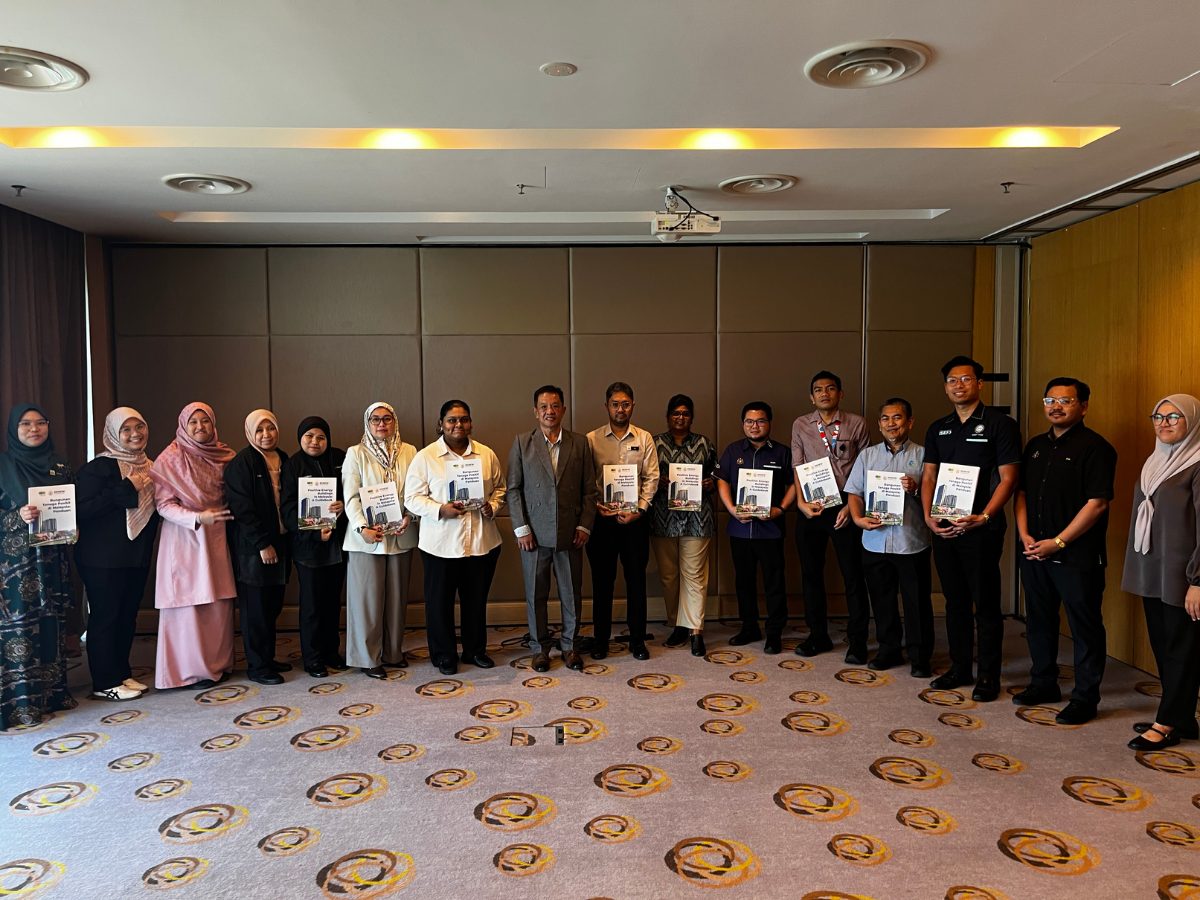
ICLEI Southeast Asia also turned over copies of the RENEW-SEA knowledge product Positive Energy Buildings in Malaysia: A Guidebook to the MLG participants.
The meeting formed part of the second year of RENEW-SEA in Malaysia, which has included local working group meetings, peer-learning activities, and technical training aimed at strengthening local-government capacity on energy efficiency, renewable energy and PEB approaches.