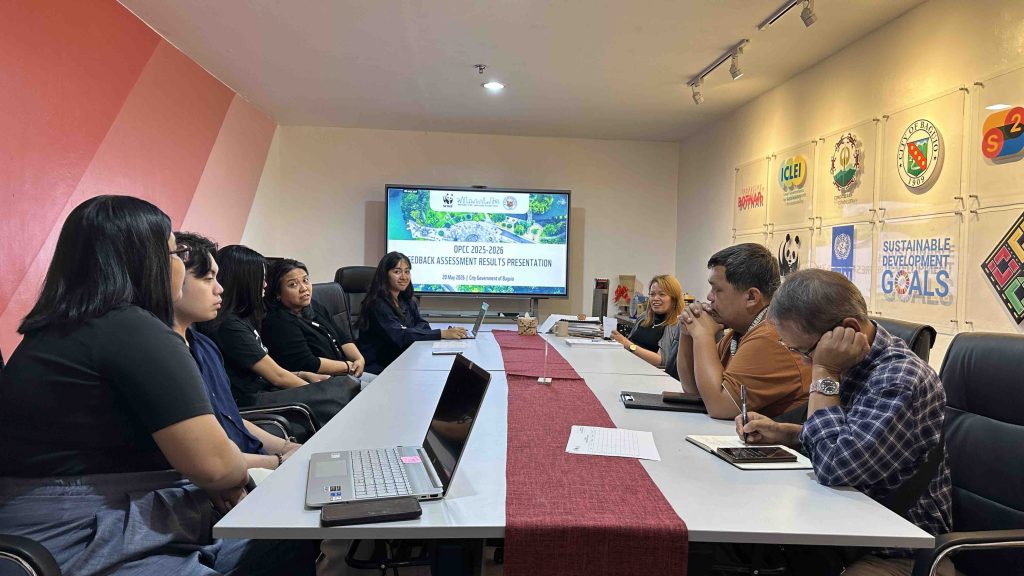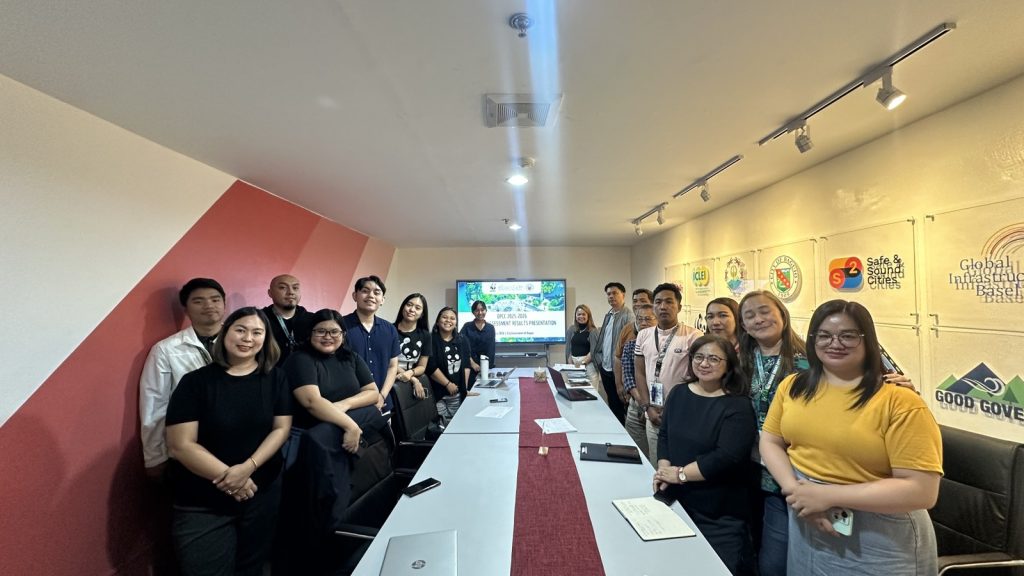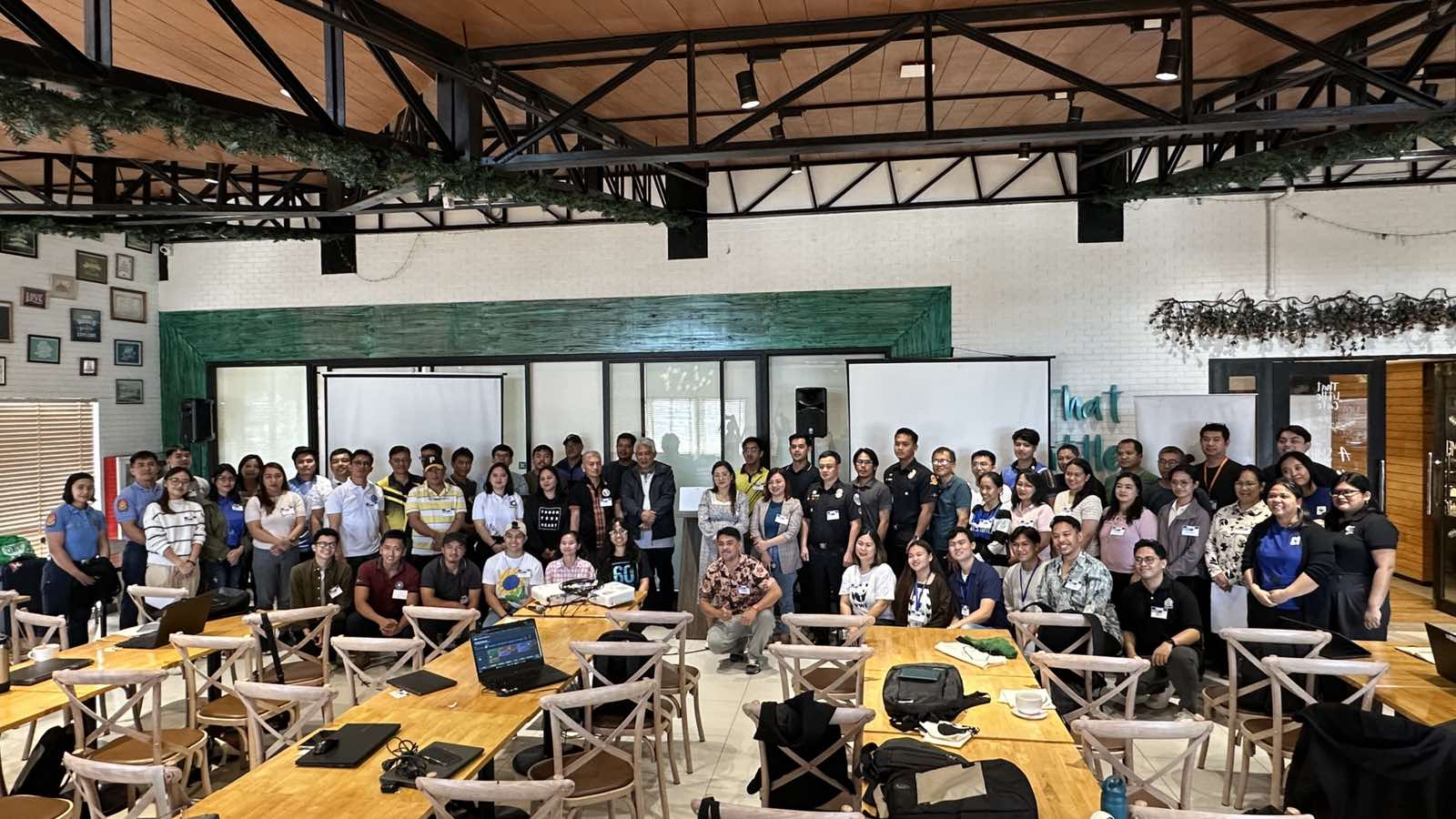
ICLEI SEA and WWF-Philippines conduct a Local Energy Efficiency and Conservation Plan (LEECP) formulation workshop with over 50 participants representing various offices of the Baguio City Government last May 21, 2026. (Photos from WWF-Philippines)
ICLEI Southeast Asia (SEA) and World Wide Fund for Nature Philippines (WWF-Philippines) presented findings of their assessment of Baguio City’s climate efforts as part of the One Planet Cities Challenge (OPCC).
Cities that join the WWF’s OPCC are assessed when they report their climate actions, strategies, and data on the CDP-ICLEI Track. Findings and recommendations from the assessments, done using the OPCC Assessment Tool, are then outlined in an OPCC Strategic Feedback Report for each city.
ICLEI SEA and WWF-Philippines localized the OPCC Strategic Feedback Reports for participating cities in the Philippines, including Baguio City, which joined the 2025 reporting cycle of the OPCC.
The localized reports explain the local relevance and importance of assessing local climate action and provide feedback on how a city can maintain its alignment with the Philippines’ Nationally Determined Contribution Implementation Plan (NDCIP) and National Adaptation Plan (NAP), to ensure that local policies and measures support national climate policies and priorities while maintaining ambitious climate leadership according to global standards set by OPCC.
The OPCC Localized Feedback Report of Baguio City was presented by representatives of ICLEI SEA and WWF-Philippines to the city’s local government officials last May 20, 2026. The localized report focused on the identified strengths and best practices of the city, as well as critical gaps that needed to be addressed to ensure the city’s emissions reduction target aligns with the global Paris Agreement goal of limiting global warming to a maximum of 1.5°C.
ICLEI SEAS added a layer of discussion and recommendations to better align the city-level commitment and actions with national policies and priorities as indicated in the NDCIP and NAP.
Findings on Baguio’s climate efforts
Findings revealed that Baguio City’s current or near-term climate actions and outcomes slightly outperformed its current climate goals, considering that the city’s level of climate ambition is relatively stronger compared to its national peers.
The city’s strengths are in analysis, planning, implementation, and monitoring, and its climate risk and vulnerability assessment is found to be quite advanced for OPCC standards.
As for the city’s climate targets, these include an adaptation goal by 2030 that is in line with the NAP timeline; a GHG emissions target by 2030; decarbonization targets by 2060; a renewable energy target; and a transport target.
Institutionalizing climate targets
Meanwhile, gaps showed the need for a stronger formal ambition of the city’s climate targets, specifically in its long-term adaptation goals, and energy poverty and energy efficiency targets.
Pamela Cabacungan, ICLEI SEA Low Emission Development Strategies (LEDS) Manager, said that a stronger formal ambition means institutionalizing climate targets, which provide an evidence-based anchor for decision-making to enable current and future policies, programs, projects, and investments to be assessed consistently against a shared direction and measurable climate impact.
Cabacungan also emphasized how a formally adopted target aligns political leaders, department heads, technical staff, and communities around a common commitment.
“(A formally adopted target) signals that climate action has moved beyond symbolic support towards transparent, accountable, and sustained governance, regardless of changes in leadership and priorities,” she added.
ICLEI SEA and WWF-Philippines recommended that the city add targets in energy access and poverty, as well as energy efficiency. OPCC increasingly emphasizes just transitions, requiring cities to show how climate action will reduce energy poverty and ensure affordable, reliable energy for all. Energy efficiency, on the other hand, offers the most cost-effective mitigation levers.
To help the city begin addressing the gap in local energy efficiency targets, the ICLEI SEA and WWF-Philippines team conducted a Local Energy Efficiency and Conservation Plan (LEECP) formulation workshop for the city government’s technical staff after the presentation of the OPCC Localized Feedback Report.
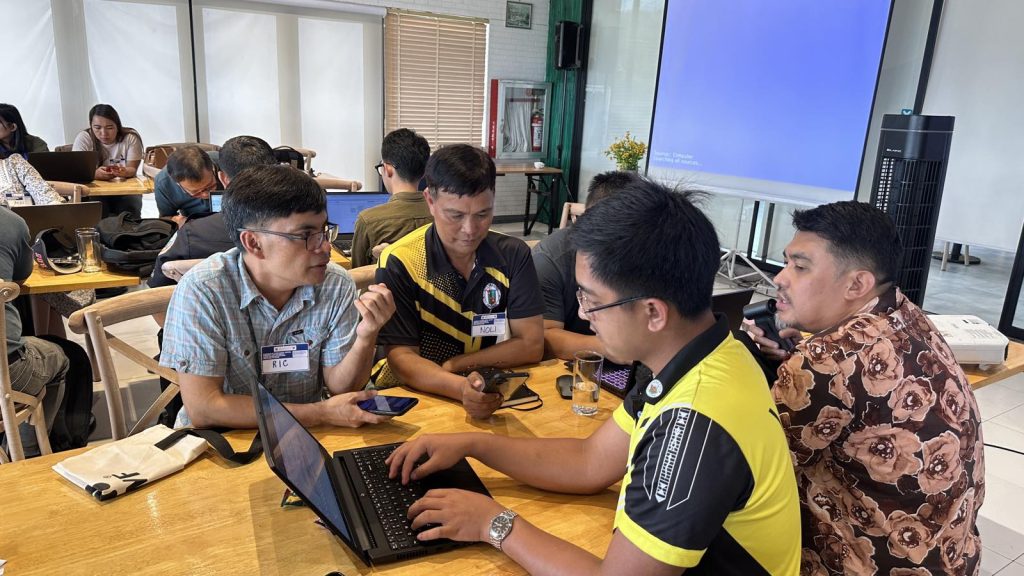
ICLEI SEA and WWF-Philippines conduct a Local Energy Efficiency and Conservation Plan (LEECP) formulation workshop with over 50 participants representing various offices of the Baguio City Government last May 21, 2026. (Photo from WWF-Philippines)
Baguio’s emissions inventory
Baguio City’s Greenhouse Gas (GHG) inventory for the 2022 base year was also assessed, which covered direct emissions from stationary energy, transport, and waste. It was recommended that the city elevate and expand its emissions inventory to account for Scope 2 emissions (which are emissions from the use of grid-supplied electricity, heat, steam and/or cooling within the city boundary) and applicable BASIC+ sources/sectors, namely, agriculture, forestry and other land use (AFOLU) and transport, waste, industrial processes and product use (IPPU).
Baguio City reported a GHG reduction target of 0.06 tCO2e per capita by 2030 and net-zero by 2050-2060, which suggests that the city’s targets across all timeframes are meeting or exceeding its fair share of the 1.5°C pathway.
Mitigation strategies
The OPCC assessment also found that Baguio City’s planned mitigation actions only cover about 30-50% of current emissions, suggesting an action-target gap. ICLEI SEA made a list of recommended mitigation and adaptation strategies for the reported critical emission sources and climate hazards of the city, based on the priority policies and measures outlined in the NDCIP and NAP.
After the presentation of the results and findings, Baguio City local government officials also shared the city’s continuing climate efforts. They affirmed the city’s commitment to maintain its position as a climate leader among its peer cities in the Philippines, and acknowledged the recommendations of WWF-Philippines and ICLEI SEA, particularly in updating and expanding the scope and coverage of its GHG emissions inventory and in setting and intensifying its targets.
The OPCC, the flagship activity of the One Planet Cities Program, is a friendly competition designed by WWF to develop and disseminate the best practices in climate mitigation and adaptation of cities worldwide by encouraging participating cities to report their climate actions, strategies, and data through a standardized international platform. Since the OPCC’s inception, WWF has partnered with ICLEI as its technical partner, mainly through the use of its online reporting platform for climate data, the CDP-ICLEI Track.
ICLEI SEA supports OPCC activities in the region through in-depth capacity-building workshops, mainly on climate data reporting using the CDP-ICLEI Track, but has expanded to include topics such as local climate action planning; GHG inventory; Inclusive Climate Action; LEECP; and developing Climate and Disaster Risk Assessments (CDRA).