The following is just a preview. The full Terms of Reference can be accessed HERE.
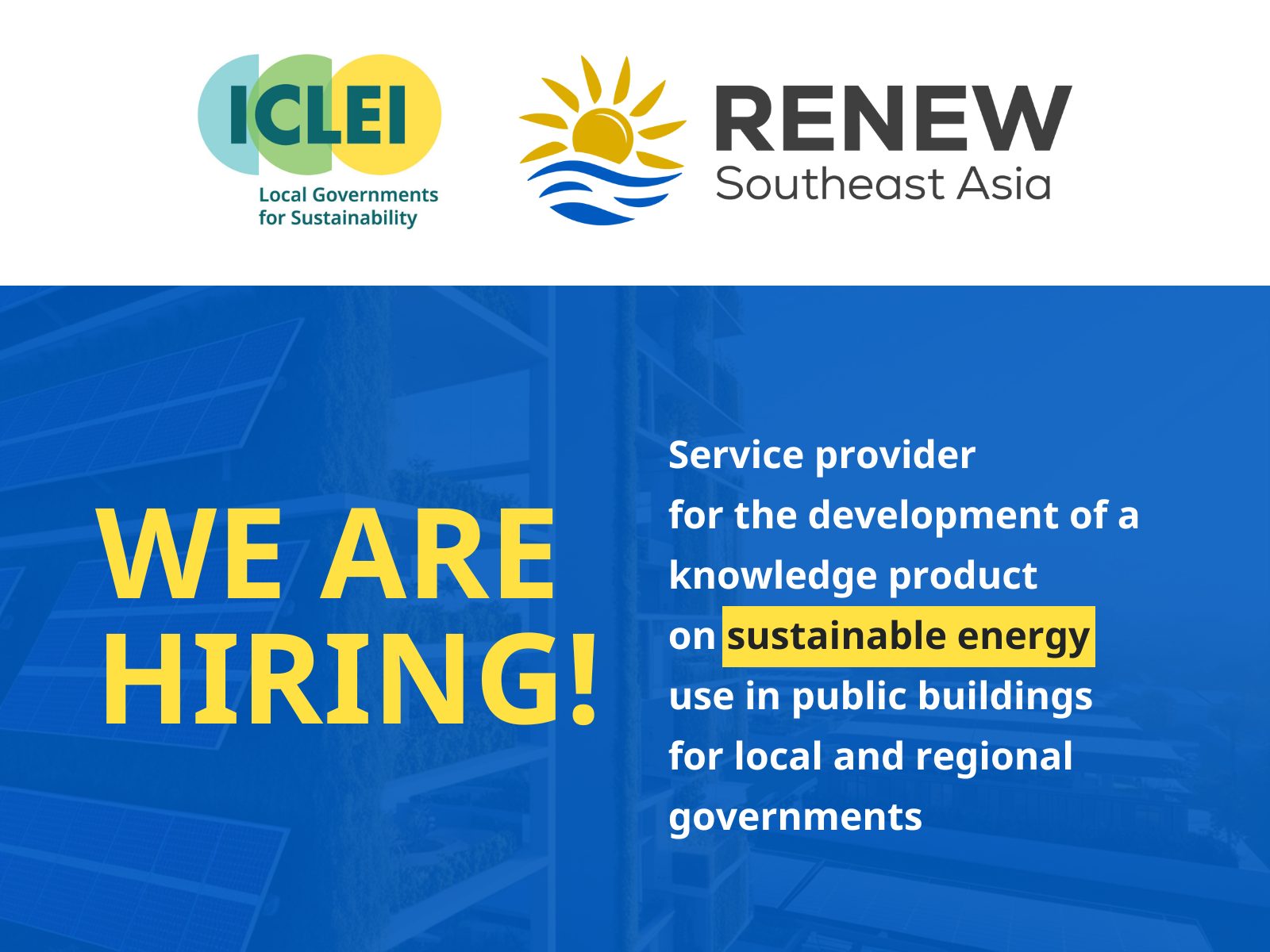
Under the guidance and supervision of the ICLEI World Secretariat, the objective of this work will be to develop a knowledge product on sustainable energy use in public buildings that examines the applicability of the concept of PEBs to the Southeast Asian region, with a particular emphasis on Malaysia and Indonesia, and serves as a practical guide to implementation.
The scope of this work is as follows:
- Development and drafting of one knowledge product on sustainable energy use in buildings, of roughly 30-40 pages.
- An English version must be provided
* If the document can also be provided in a regional language of Southeast Asia (Bahasa Indonesia, Bahasa Malay), it will be considered favorably - In properly formatted DOC and PDF formats
- The page count is a guideline, not a strict requirement
- It is optional, but strongly recommended, to include infographics and other visual aids to effectively communicate key findings and support the points made in the brief.
- The primary target audience for the Knowledge Product is LRGs, building sector stakeholders, policymakers, and similar organizations in Indonesia and Malaysia.
- An English version must be provided
The knowledge product should explore the following questions to support the needs and objectives of LRGs in developing their strategies.
- Background/scene-setting (1-2 pages): An exploration of various building energy-related concepts (e.g. zero-emissions buildings, green buildings, etc.), leading to a clear definition of positive energy buildings, applicable to the Southeast Asian context.
- One section on Indonesia (~15 pages), which includes:
- Background/scene-setting (1-2 pages): What is the status of building energy use in Indonesia? What are the guiding/framework policy measures at a national level and at the subnational level (emphasis on Special Region of Yogyakarta) (green buildings, zero-emissions buildings, rooftop solar, etc.)?
- Main content (~10 pages): A ‘guidebook’ or similar that includes practical implementation measures (policies, planning, processes, and regulatory frameworks, procurement, behavioural changes, etc.) that can support the development of PEBs in buildings in Indonesia (For example, this can include initial building suitability criteria, considerations for renovation vs. new-build, financing options, procurement guidelines, data requirements, etc.)
- Main content (~5 pages): What are some innovative ways of financing PEB solutions (unique business models, public provision of services, public-private partnerships etc.) in public buildings in Indonesia, keeping in mind funding and financing challenges for subnational governments in Malaysia and Indonesia? What practical steps can LRGs take to secure funding for such solutions (e.g. own-source revenue, etc.)?
- One section on Malaysia (~15 pages), which includes:
- Background/scene-setting (1-2 pages): What is the status of building energy use in Malaysia? What are the guiding/framework policy measures at a national level and at the subnational level (emphasis on Melaka State) (green buildings, zero-emissions buildings, rooftop solar, etc.)?
- Main content (~10 pages): A ‘guidebook’ or similar that includes practical implementation measures (policies, planning, processes, and regulatory frameworks, procurement, behavioural changes, etc.) that can support the development of PEBs in buildings in Malaysia (For example, this can include initial building suitability criteria, considerations for renovation vs. new-build, financing options, procurement guidelines, data requirements, etc.)
- Main content (~5 pages): What are some innovative ways of financing PEB solutions (unique business models, public provision of services, public-private partnerships etc.), in public buildings, keeping in mind funding and financing challenges for LRGs in Malaysia? What practical steps can LRGs take to secure funding for such solutions (e.g. own-source revenue, etc.)?
- Case studies (1 page each): What are some best practice examples of energy-efficient public buildings and what lessons can LRGs learn from these cases?
- One case study from Indonesia
- One case study from Malaysia
- One international case study
- Conclusion (1-2 pages): What are the future prospects for the PEB concept in Southeast Asia more broadly?
A final outline can be determined during discussions between the service provider and ICLEI.
Working processes and procedures
The tentative timeline for completion of this work, estimated at a maximum duration of 10 weeks is outlined below:
- Week 1: Kick-off meeting and outline developed in collaboration ICLEI
- Week 2 – 4: Research and preparation of first draft
- Week 5 – 6: ICLEI receives first draft and provides comments
- Week 7 – 8: Consultant reviews feedback and provides updated draft
- Week 9 – 10: Final review for minor comments if any; final draft submitted to ICLEI
Submission Process
Kindly send the following documents to participate in the selection:
- Curriculum Vitae of the key members of the team/consortium – 1 pdf document of up to 2 pages for each person.
- Examples of previous work on related themes (energy, cooling, energy in SEA, etc.), including academic papers, reports, or similar projects (as documents or links to publications)
- Company/organization registration document(s) and/ or certificate of incorporation in the main country of operation for companies forming the consortium, if relevant.
- There is no strict format for the proposal document, but it should include:
- Work plan and methodology, indicating the start and end date of each section and the responsible party/team member. Research methods to be included.
- Budget proposal: A detailed budget breakdown must be submitted, indicating hourly/daily rates, the number of hours/days per section of the work, as well as any other costs necessary to fulfill this assignment.
Kindly submit your proposal, budget, and supporting documents to sustainable.energy@iclei.org with the subject line: “RENEW-SEA PEB Knowledge Product”. Please contact the same email in case of any questions.
The above is just a preview. The full Terms of Reference can be accessed HERE.