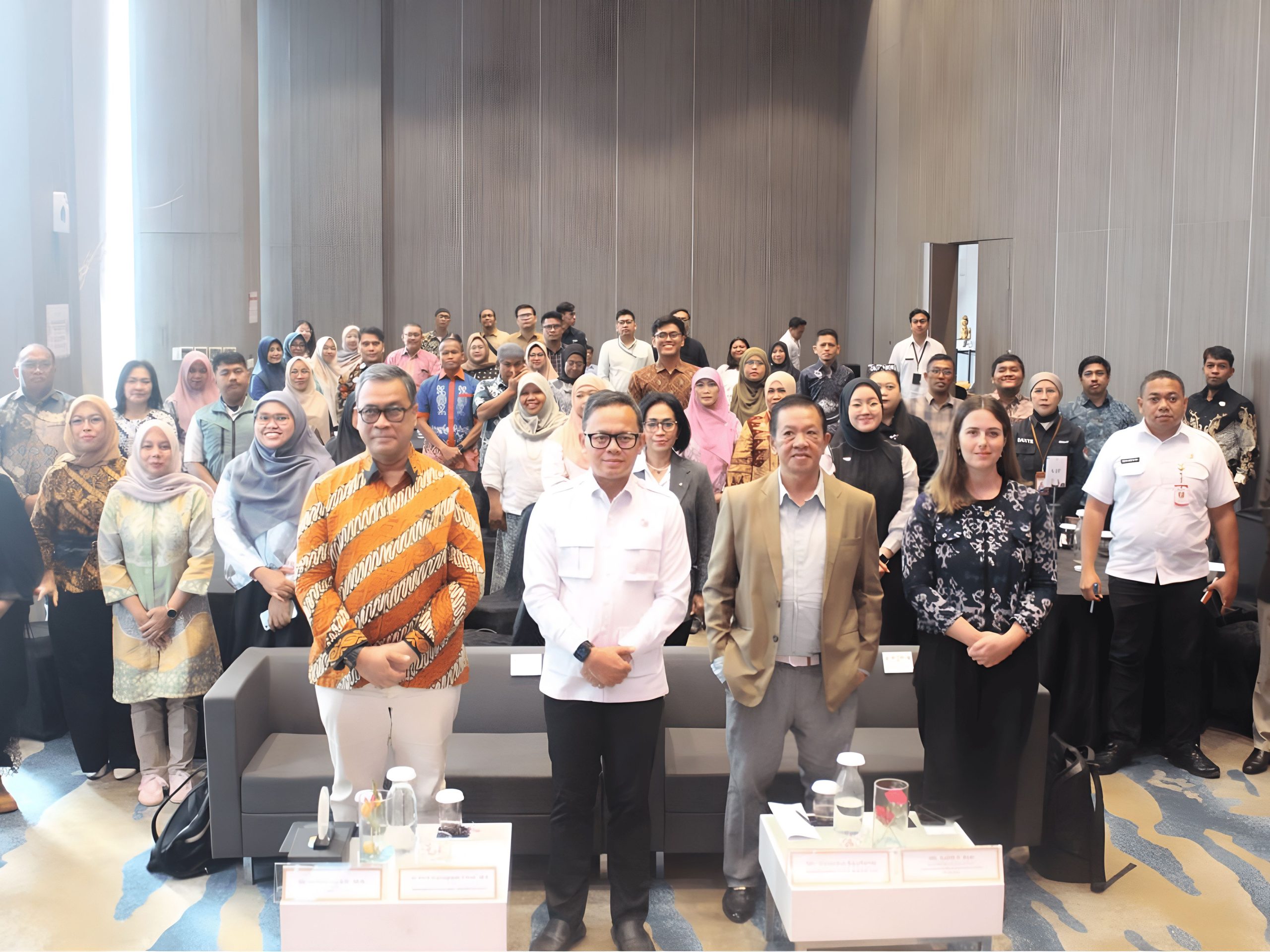
On 6 May 2026 in Jakarta, Day 1 of the SIRA National Policy Dialogue gathered more than 120 in-person and online participants representing national and local government agencies, CSOs, NGOs, and development partners.
The growing urgency to tackle unequal climate and disaster impacts in cities is pushing local governments toward more inclusive planning frameworks. Under the Enhancing local capacities in socially inclusive resilience in Asia (SIRA) Project, ICLEI Indonesia, in collaboration with the Indonesia National Disaster Management Agency (BNPB), on 6–7 May 2026 in Jakarta hosted a National Policy Dialogue and Capacity Strengthening Training to explore key pathways toward more equitable and inclusive climate action.
Over 120 stakeholders took part, including 25 designated local government staff from 15 SIRA cities in Indonesia. These participants represented Regional Planning Agencies (Bappeda), Environmental Agencies, Regional Disaster Management Agencies (BPBD), Women’s Empowerment and Child Protection Offices, and other technical planning units, to build their technical capacity on Nature-based Solution (NbS) through a gender equality, disability and social inclusion (GEDSI) lens.
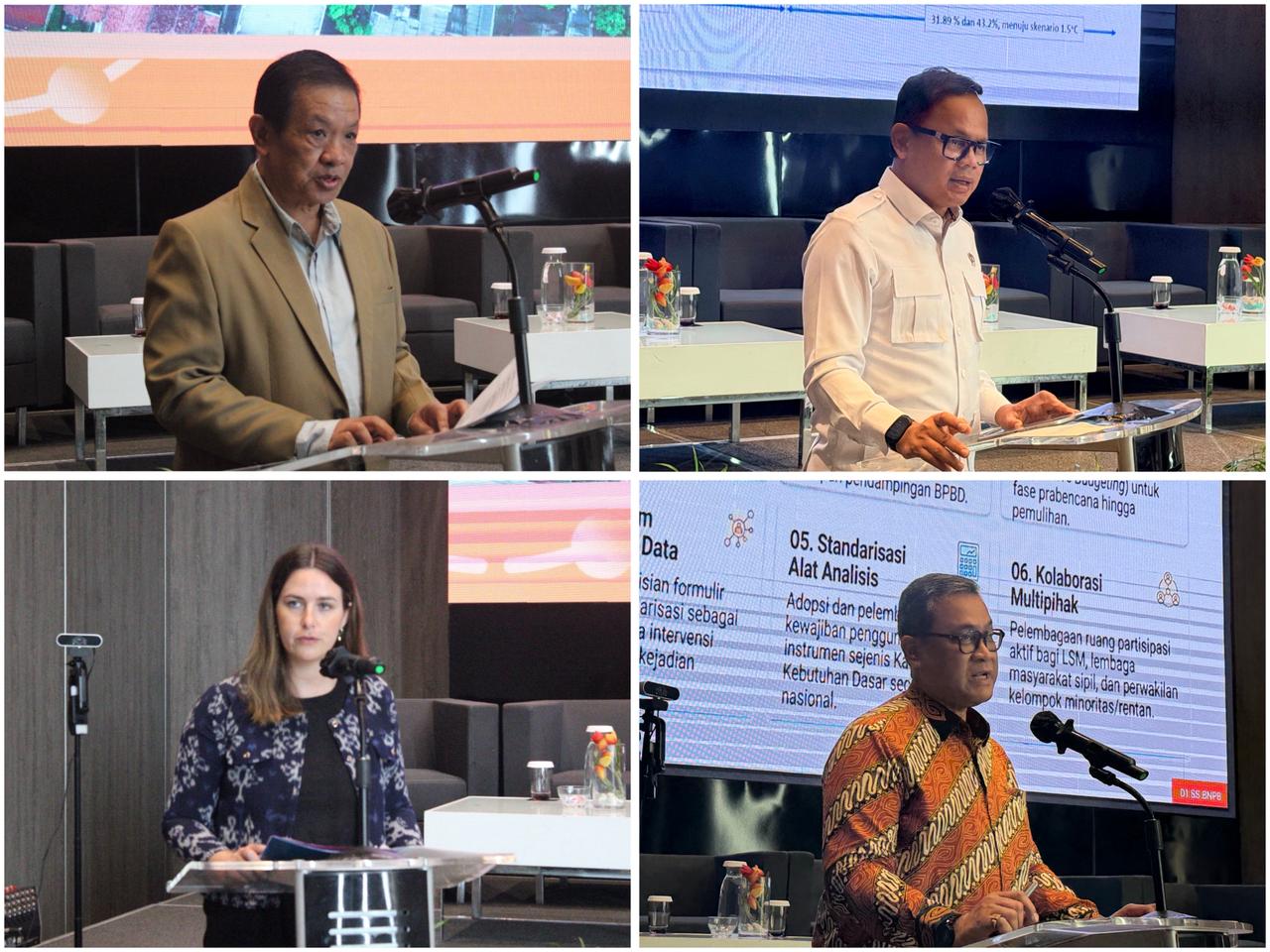
Pictured during the high-level session keynote speeches on 6 May 2026 are (from upper left; clockwise) Victorino Aquitania, Regional Director of ICLEI Southeast Asia; Bima Arya Sugiarto, Vice Minister of Home Affairs of Indonesia; Raditya Jati, Deputy of System and Strategy at BNPB ; and Judith A’Bear, Head of Climate Policy and Finance at the UK Embassy.
Opening the first day, ICLEI Southeast Asia Regional Director Victorino Aquitania stressed that resilience must be human-centered. The day’s dialogue was anchored in a shared understanding that climate change and disaster risks are increasingly shaping urban vulnerabilities, with disproportionate impacts on women, persons with disabilities, the elderly, children, and other marginalized groups.
Reflecting on this, Aquitania said that translating inclusive climate commitments into actionable local strategies is central to building resilient cities that leave no one behind.
Vice Minister of Home Affairs Bima Arya Sugiarto further reaffirmed that with national policies in force, resilience is ultimately built through local action with scalable solutions. He also noted that “It is key that GEDSI must be integrated into policies and budgets, rather than positioned as an add-on program.”
These statements were supported by Judith A’Bear, Head of Climate Policy and Finance at the UK Embassy, who underscored the SIRA programme’s aim to support local implementation in alignment with national policy. SIRA advocates that climate actions should reflect local needs and realities, with collaboration at the center of these efforts.
Meanwhile, Deputy of System and Strategy of National Disaster Management Dr. Raditya Jati, highlighted that at BNPB, inclusive resilience and risk reduction are designed and measured by integrating gender mainstreaming into disaster planning, strengthening gender equality mechanisms, ensuring gender-responsive budgeting, improving disaggregated data use, and fostering multi-stakeholder collaboration.
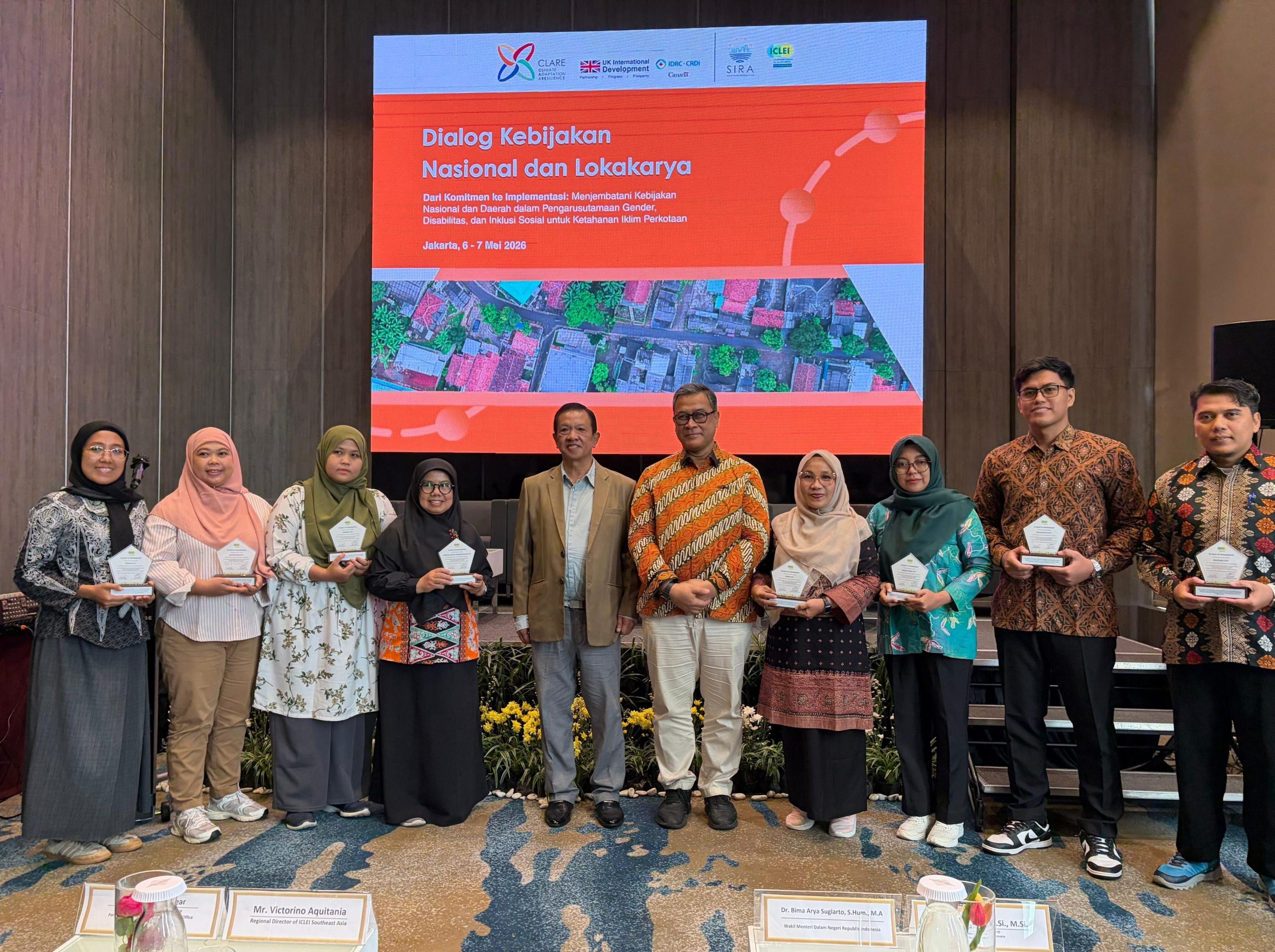
In the picture, ICLEI member city representatives from the SIRA project are seen receiving membership plaques in recognition of their continued commitment to climate action, including representatives from Bogor, Balikpapan, Cirebon, Jakarta, Jambi, Probolinggo, Bontang, and Yogyakarta cities.
Policy dialogue to identify structural gaps between planning and implementation
Setting the context, findings from the SIRA Project reflected both progress and persistent structural gaps in GEDSI mainstreaming across urban climate action in Indonesia. These gaps are most apparent in perceptions of gender, social issues, and meaningful participation at the institutional level.
The national panel saw Dr. Dra. Dewa Ayu Laksmiadi Janapriati of the Ministry of Women’s Empowerment and Child Protection (Kemen PPPA), Irfan Darliazi from Ministry of National Development Planning (Bappenas), IIs Yulianti of BNPB, Arief Febriyanto of the Ministry of Home Affairs, and Puji Iswari from the Ministry of Environment, outlining mandates, policy instruments, and recommendations to integrate gender mainstreaming policies for inclusive planning.
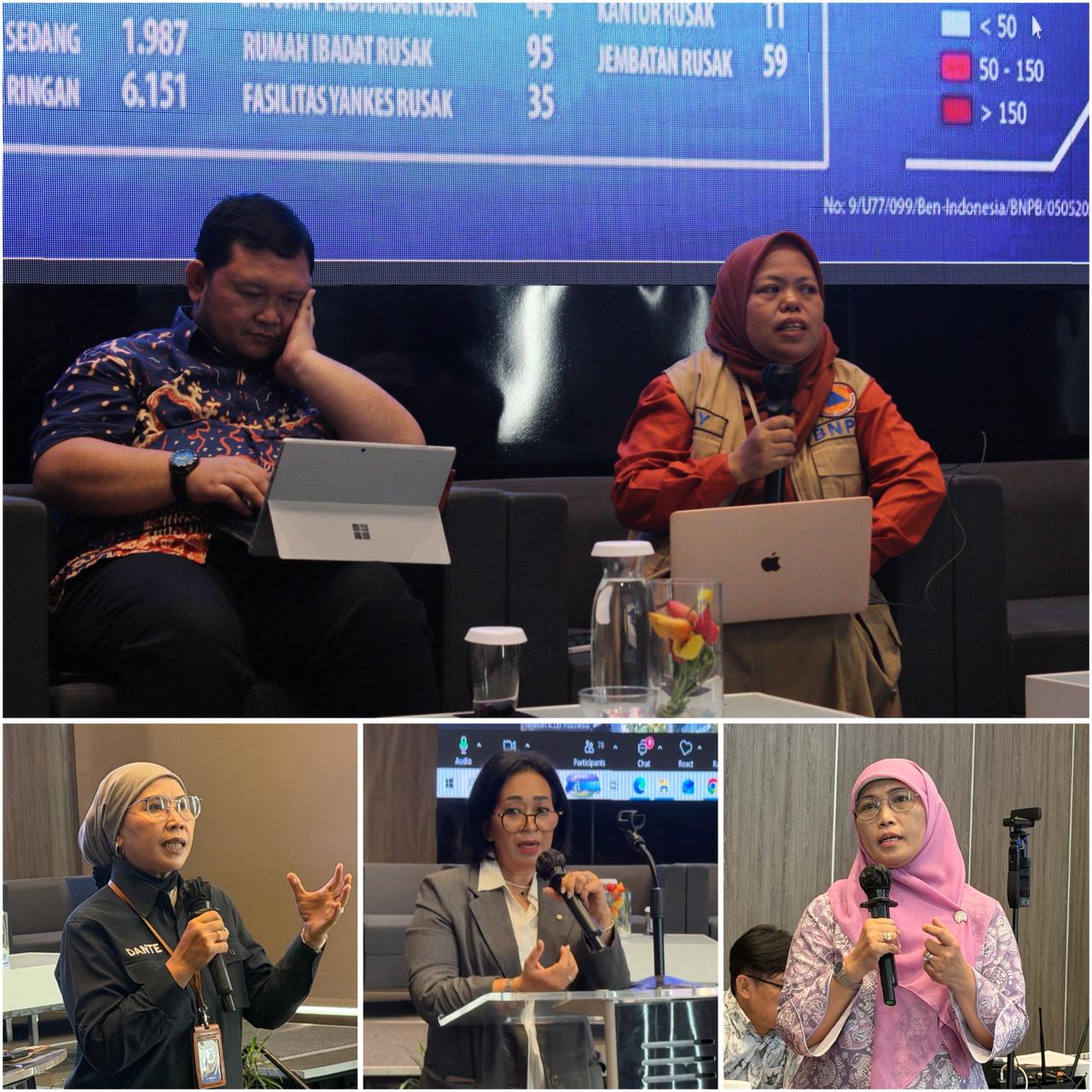
The panel session on the national policy dialogue on 6 May 2026 featured key resource persons including Irfan Darliazi from the Ministry of National Development Planning (Bappenas); IIs Yulianti of BNPB; Dante Rigmalia, Head of the National Commission on Disability; Dewa Ayu Laksmiadi Janapriati from the Ministry of Women Empowerment and Child Protection (Kemen PPPA); and Sri Indah Wibi Nastiti from APEKSI.
Meanwhile, discussions with civil society organizations and thematic experts deepened the analysis of implementation gaps. Dr. Dante Rigmalia, Head of the National Commission on Disability, and Farhan Helmy, President of DILANS, shared that structural inequalities and access gaps remain a major barrier to the meaningful participation of vulnerable groups in decision-making processes.
IPB University’s Centre for Climate Risk and Opportunity Management in Southeast Asia Pacific (CCROM-SEAP) researcher I Putu Santika further elaborated on the transformative value of data- and risk-based GEDSI approaches in strengthening more inclusive climate policies, given the differing levels of hazard, exposure, and adaptive capacity across social groups.
Bagus Yaugo Wicasono from Save the Children Indonesia highlighted child-rights approaches within climate adaptation and disaster risk frameworks, ensuring that inclusion is embedded not only in policy but also in the planning documents.
The Association of Indonesian Municipalities (APEKSI) and Association of Indonesia Regencies (APKASI) also urged for local strategies to embed GEDSI indicators into key planning instruments, including the Regional Medium-Term Development Plan (RPJMD), Regional Long-Term Development Plan (RPJPD), Disaster Risk Reduction Action Plans (Rencana Aksi PRB), thematic Musrenbangs (Community Development Planning Forum), and climate action plans (RAD). They also stressed the need for local governments to embrace multi-stakeholder collaboration, prioritize local assessments and studies, and strengthen capacity through training.
Local governments lead actionable, inclusive climate action
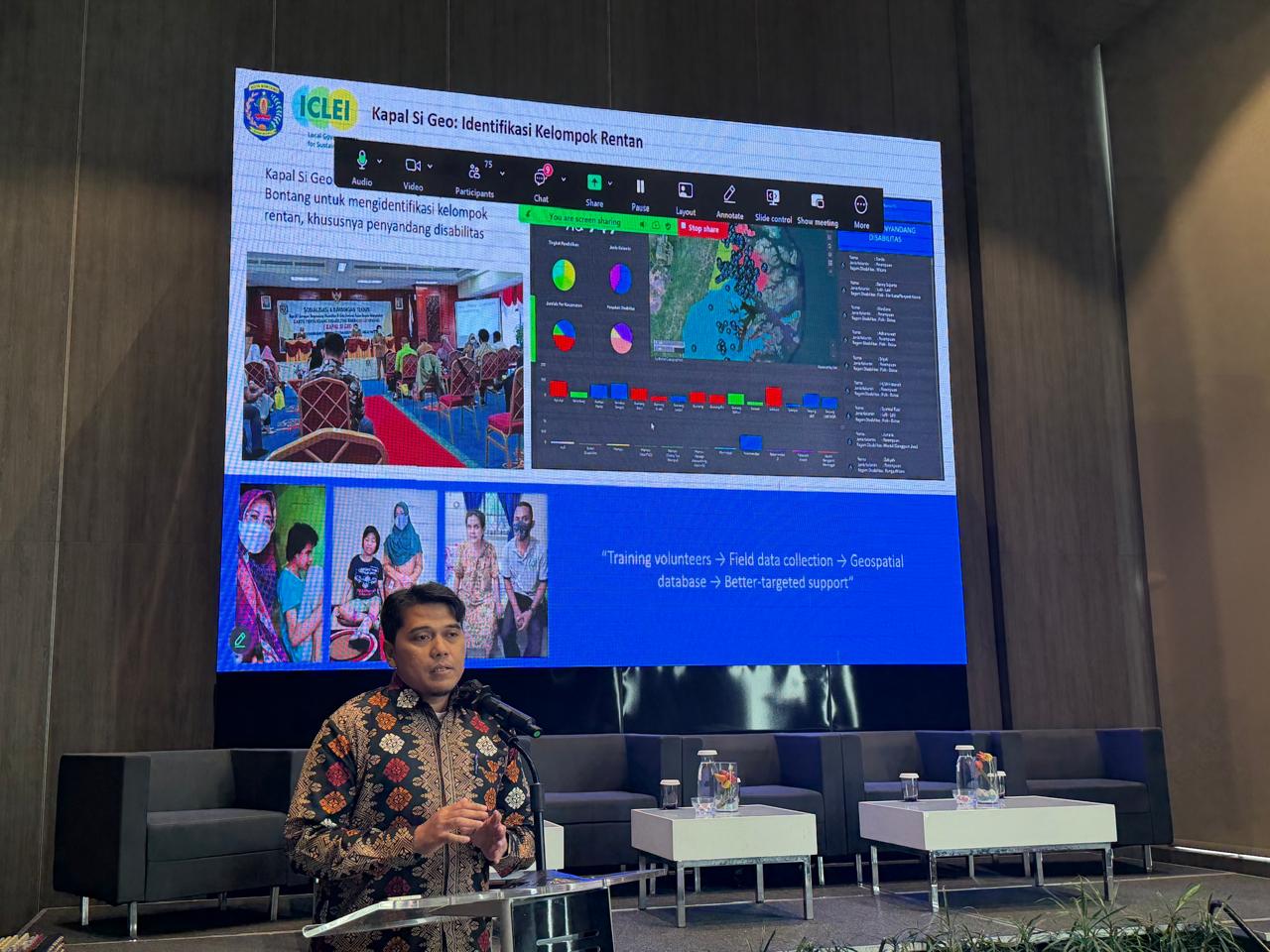
On 6 May 2026, Muji Esti Wahyudi from the Regional Planning Agency (Bappeda) of Bontang City is seen presenting the city’s best practice on GEDSI-informed flood management preparedness strategy.
For city governments on the front lines of climate risks, continuous capacity strengthening and peer learning is not optional but essential to keep planning, implementation, and resilience-building on track.
Sharing best practices, Muji Esti Wahyudi from the Bappeda of Bontang City presented the city’s experience in building climate resilience through a GEDSI approach in flood risk management, using a geospatial tool called Si Kapal Geo. Since 2021, the city has developed a geospatial database to map vulnerable groups, including persons with disabilities, the elderly, orphans, and socio-economically vulnerable women, using spatial tagging integrated into a geoportal. This system strengthens data management and supports more inclusive flood response efforts.
Day 2 of the SIRA training in Indonesia focused on strengthening local government capacity to integrate Nature-based Solutions (NbS) for more inclusive urban resilience.
The session equipped 25 selected participants who had previously undergone SIRA training, representing 14 cities and regencies, including Bogor, Jambi, Semarang, Tanjungpinang, Yogyakarta, Bontang, Probolinggo, Bandung, Cirebon, Langsa, Balikpapan, Medan, and Pekanbaru.
Through interactive group work and simulation facilitated by Ikrom Mustofa from Universitas Islam Indonesia, participants developed project proposals for NbS interventions aimed at attracting funding beyond local government budgets.
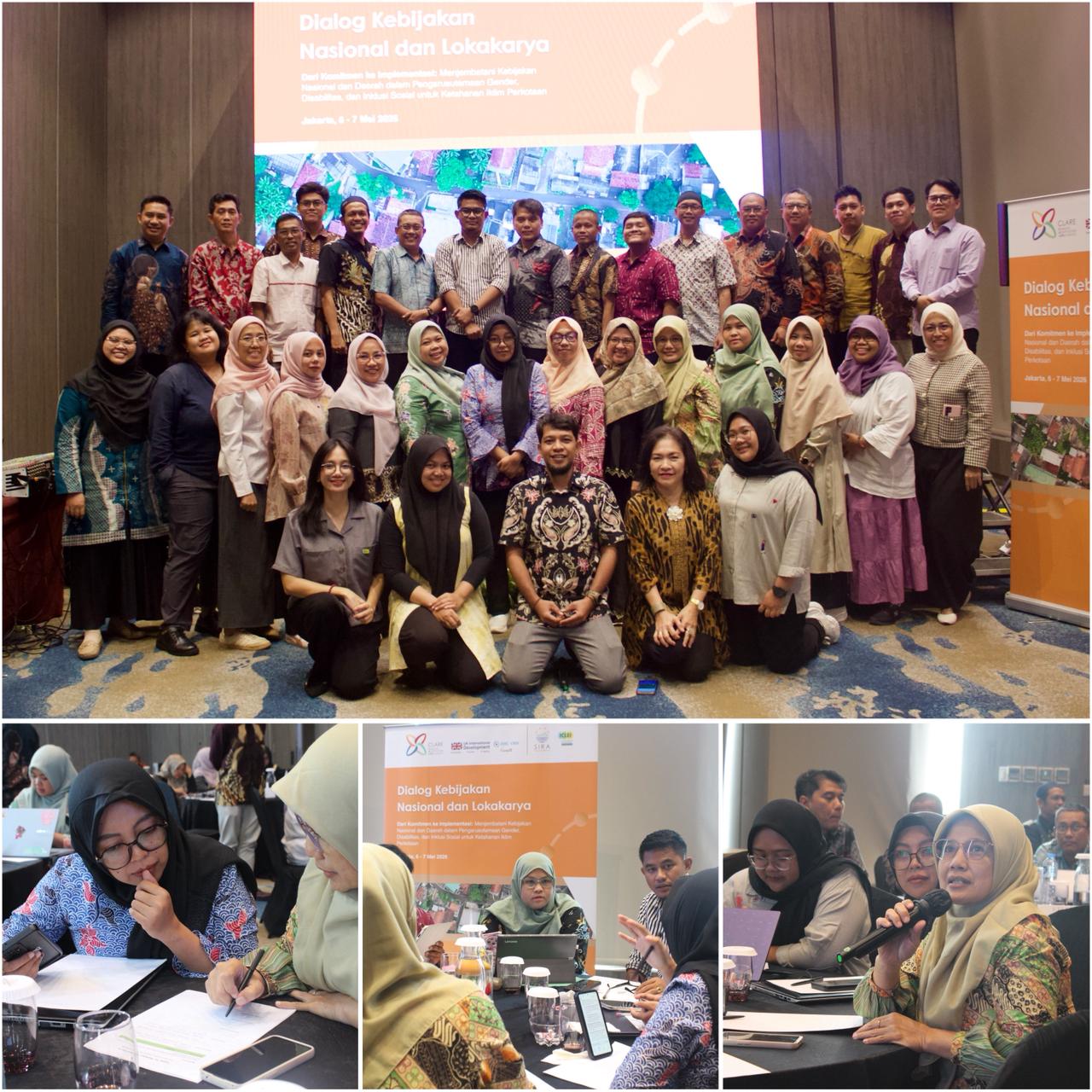
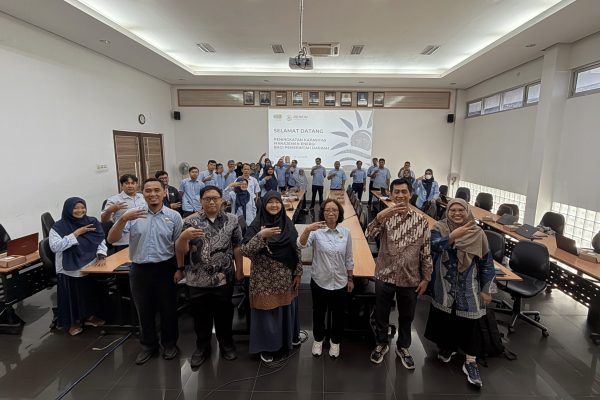
On 7 May, more than 30 participants, including local government staff representatives from 14 cities, participated in a full-day capacity strengthening training on Nature-based Solutions (NbS) and GEDSI-focused resilience strategies.