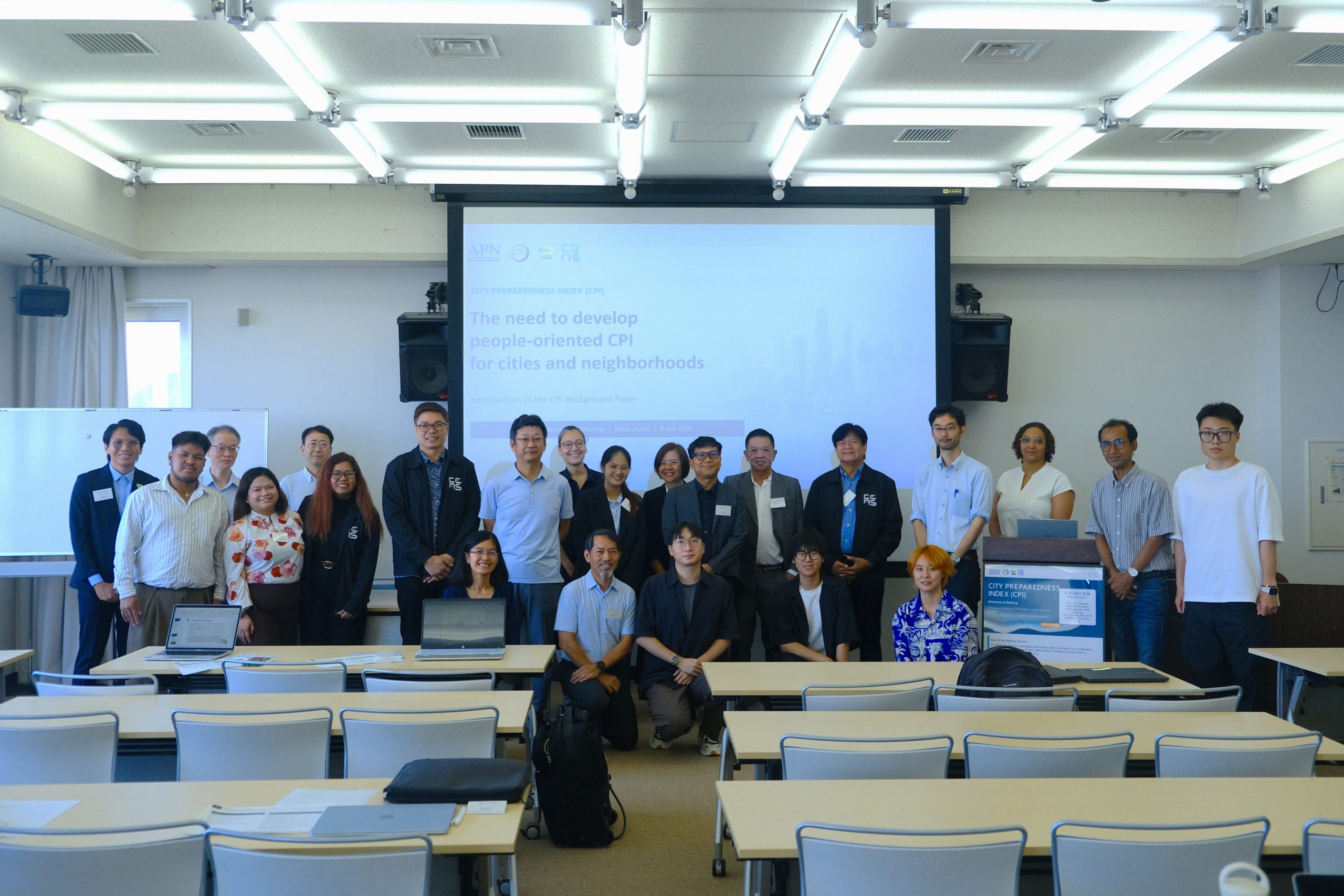
Representatives of organizations within the CPI Project consortium during the CPI Project writing workshop and meeting, held July 9-11, 2026 in Kobe, Japan. (Photo from Kobe University)
ICLEI Southeast Asia (SEA) continues to contribute to the development of a City Preparedness Index (CPI)—intended to be a tool for cities to assess their climate resilience—with its partners from Bangladesh, Indonesia, Japan, and Thailand.
Recently, ICLEI SEA presented its research on flood preparedness perceptions of local government staff and residents of Borongan City and Legazpi City, Philippines in the writing workshop and meeting of the “Unraveling Urban Resilience using City Preparedness Index: Scientific Evaluation Method for Developing Policy and Action Networks,” also known as the CPI Project, last July 9-11, 2026 in the City of Kobe, Japan.
Results from Borongan and Legazpi
Through perception surveys, ICLEI SEA’s study found overall high levels of perceived flood preparedness in both cities; however, Borongan respondents reflected low levels of awareness and actual practice of flood preparedness actions and behaviors, despite giving their city high levels for perceived flood preparedness. Meanwhile, results from Legazpi respondents reflected the opposite of this; perceiving their city’s flood preparedness level to be low, despite having higher levels of flood preparedness awareness and actions compared to Borongan respondents. The study describes this as a “perception-awareness-action” paradox.
Survey results also show that respondents from local governments have a probable bias towards perceiving their city’s flood preparedness as high.
The study found that key factors that influence flood preparedness perceptions are demographic and socioeconomic characteristics, such as gender, number of children, and occupation for Legazpi; as well as marital status, number of household members, and highest educational attainment in Borongan.
Based on these results, the study recommends strengthening policies and interventions for flood preparedness at the family and community levels, while improving procedural and distributive justice mechanisms through participatory governance. The findings also emphasize the importance of soft infrastructure and the psychosocial and governance dimensions of adaptive capacity for flood resilience.
ICLEI SEA analyzed data from the surveys using descriptive statistics, ANOVA, and ordinal logistic regression.
The results from the surveys in the Philippines, together with the other project countries, will feed into the numerical models to make a robust index of city preparedness in Asian Cities.
Hosted by Kobe University, the three-day writing workshop and meeting gathered representatives from organizations within the CPI Project consortium to refine the project’s findings, strengthen draft manuscripts, and agree on a publication pathway for their research and future collaborations. After consortium partners presented their research findings for peer-to-peer review, a whole day was dedicated as the writing session for them to address comments and suggestions.
The ICLEI SEA team also participated in a guided learning tour at the Kobe Bosai Center, which featured stories and efforts on resilience addressing the geological and hydrometeorological hazards faced by the city.
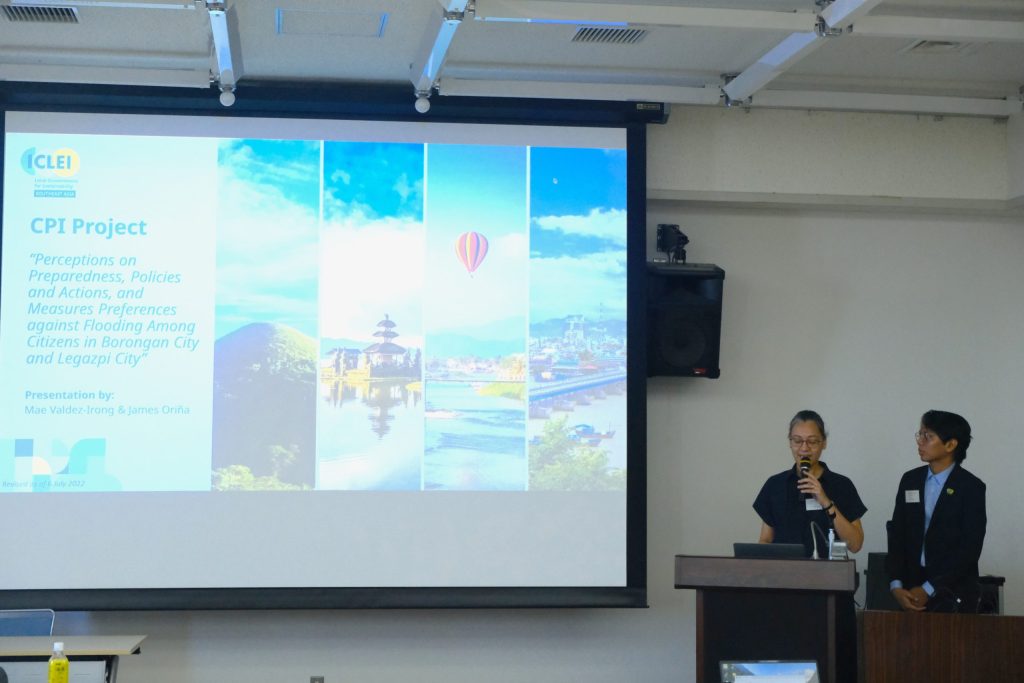
Mae Valdez-Irong (left), ICLEI SEA Regional Program Manager, presents the results of ICLEI SEA’s research on flood preparedness perceptions of local government staff and residents of Borongan City and Legazpi City, Philippines, for the City Preparedness Index (CPI) Project, July 9, 2026 at Kobe University. (Photo from Kobe University)
A tool for urban resilience
The CPI Project recognizes the challenges faced by local governments in addressing worsening climate hazards and impacts which threaten their socio-economic stability and environmental sustainability. Once developed, the CPI aims to be a comprehensive evaluation tool for cities to gauge and enhance their resilience against increasing climate-related risks, particularly flooding and urban heat.
The CPI aims to capture a wide array of resilience factors to serve as science-based benchmarks, which will help cities assess their current preparedness levels, identify critical gaps, and implement targeted interventions.
The development of the CPI will be based on collaborative research on cities in five countries facing similar hazards, such as flooding and urban heat, worsened by climate change: Bangladesh, Indonesia, Japan, Philippines, and Thailand.
The CPI Project’s research stage intends to look into which key metrics to include in the CPI and the priority policy topics of cities in terms of preparedness. In the next stages, the project will involve the CPI’s application and a network analysis of policy and action, which can provide combinations of policies to improve the preparedness of the cities.
Organizations within the CPI Project consortium, including ICLEI SEA, are leading research in their respective countries with the support of Assistant Professor and Project Lead Implementor Yuta Uchiyama from Kobe University’s Graduate School of Human Development and Environment. In collaboration with project partners, Asst. Prof. Uchiyama led the conceptualization and formulation of the survey questionnaire and methods used to gather data from selected cities in the three countries.
ICLEI SEA has been part of the CPI Project since 2023. As one of the project’s partners in the Philippines, it has conducted the CPI survey to identify and analyze preparedness indicators in the cities of Borongan and Legazpi. In 2025, ICLEI SEA conducted the survey to assess the perceptions of local government staff and residents in the two Philippine cities on urban heat and flooding, namely Legazpi City and Borongan City.
Among the factors to be assessed through the CPI are the status of cities’ policymaking and implementation, and its effects. The CPI also intends to connect preparedness with policies in various fields, such as Ecosystem-based Disaster Risk Reduction (Eco-DRR), economic and material circulations, and community practices for enhancing long-term urban resilience.
The CPI Project is funded by the Asia-Pacific Network for Global Change Research (APN).
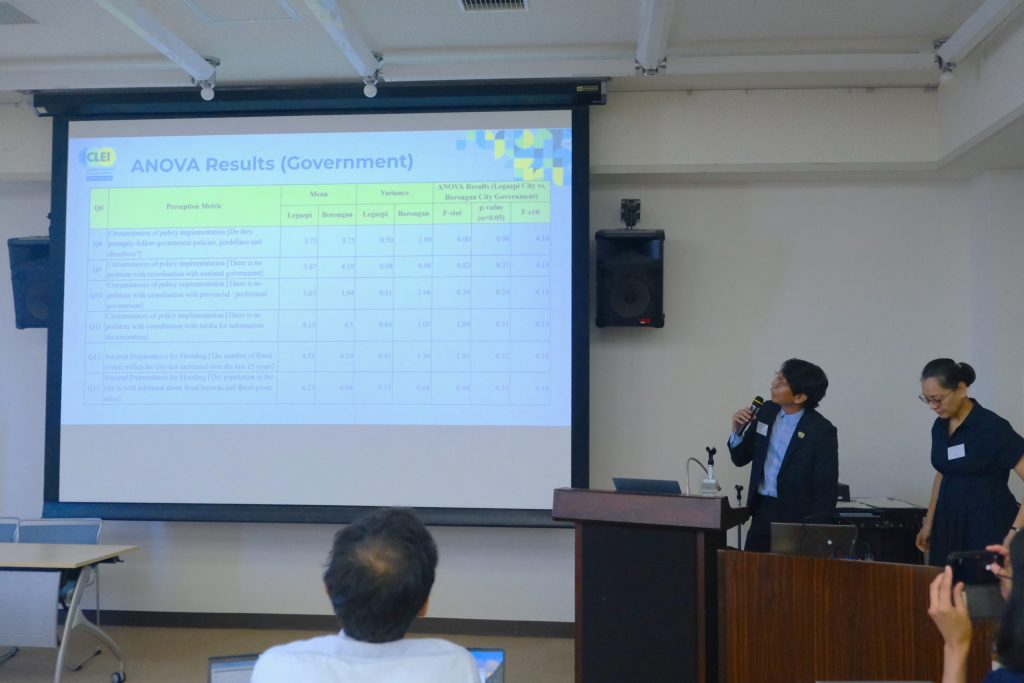
James Anthony Oriña (left), ICLEI SEA Project Officer, presents the results of ICLEI SEA’s research on flood preparedness perceptions of local government staff and residents of Borongan City and Legazpi City, Philippines, for the City Preparedness Index (CPI) Project, July 9, 2026 at Kobe University. (Photo from Kobe University)