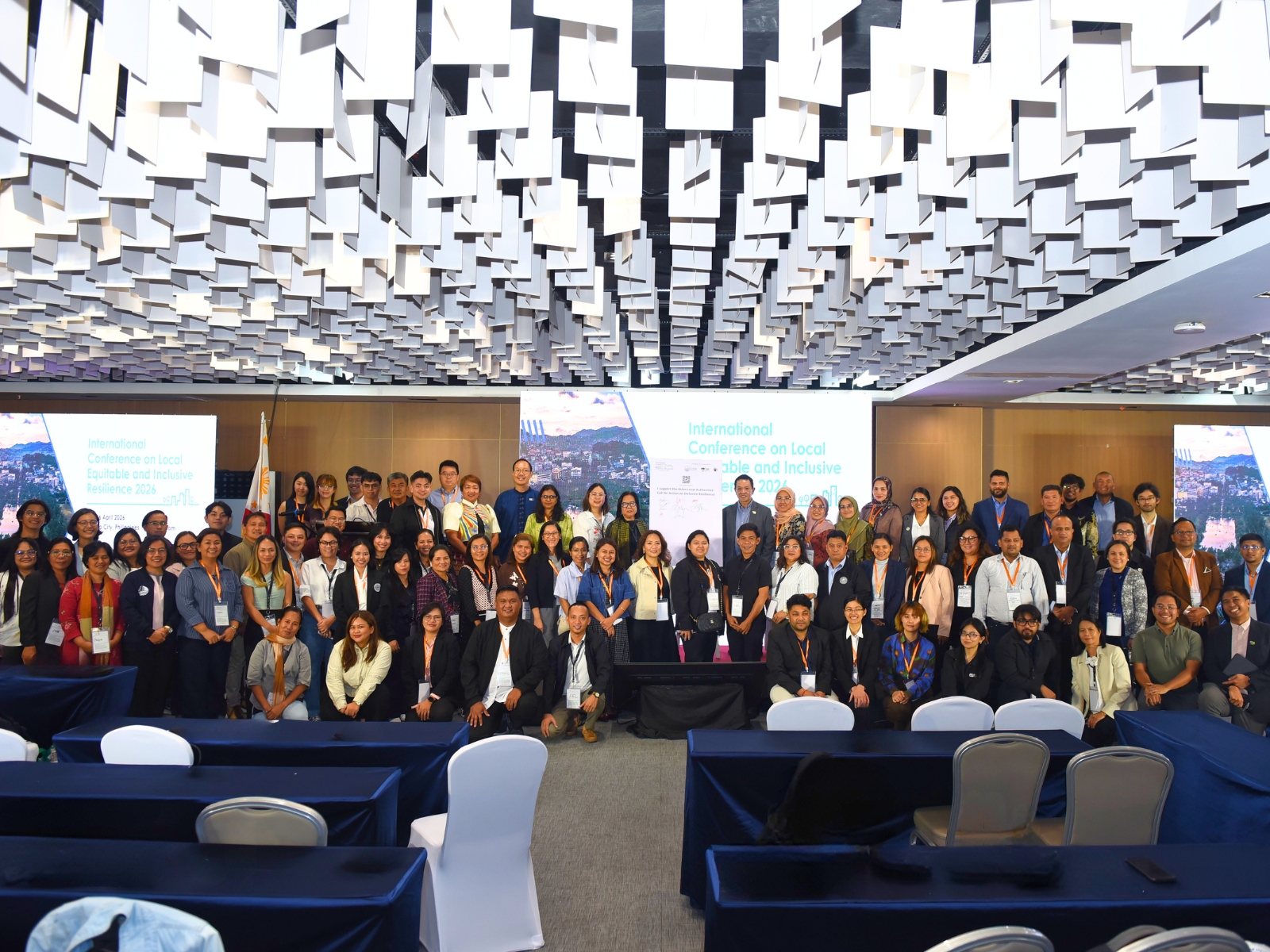
Over 400 resilience practitioners, government officials, researchers, and development partners from the Philippines, Indonesia, Nepal, Thailand, Japan, and beyond convened in Baguio City, Philippines on 14-16 April 2026 for the International Conference on Local Equitable and Inclusive Resilience.
Jointly organized and hosted by ICLEI – Local Governments for Sustainability Southeast Asia through the Enhancing Local Capacities in Socially Inclusive Resilience in Asia (SIRA) project and the City Government of Baguio, the three-day Conference explored connecting local actions to global commitments, local resilience leadership, data-driven governance, multi-stakeholder approaches to local resilience, and climate finance.
It culminated with in-person and online participants signing the Asian Local Authorities’ Call for Action on Inclusive Resilience, a 10-point document urging local governments and other actors to advance inclusive resilience that leaves no one behind.
From global to local resilience
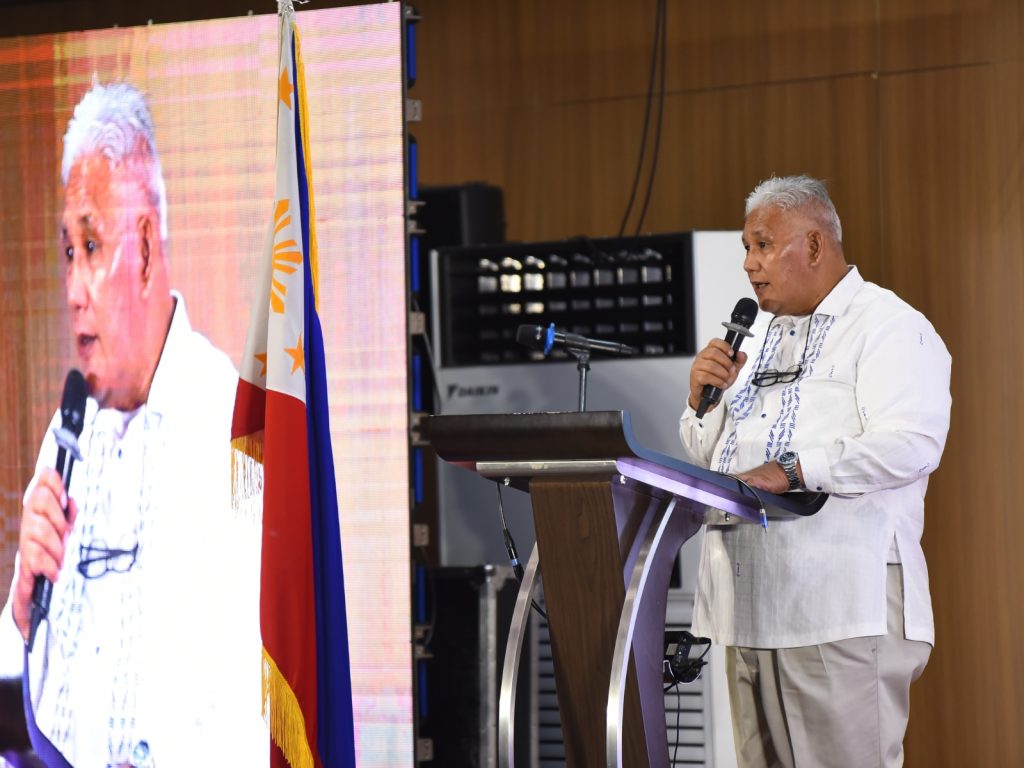
Baguio City Vice Mayor Faustino Olowan
During the opening ceremony, Vice Mayor Faustino Olowan delivered a message on behalf of City Mayor Benjamin Magalong. Underscoring the urgency of the event, he said, “Resilience must be inclusive. It must go beyond infrastructure and systems. We must ensure that those most affected are not left behind, but are instead placed at the center of our planning and solutions.”
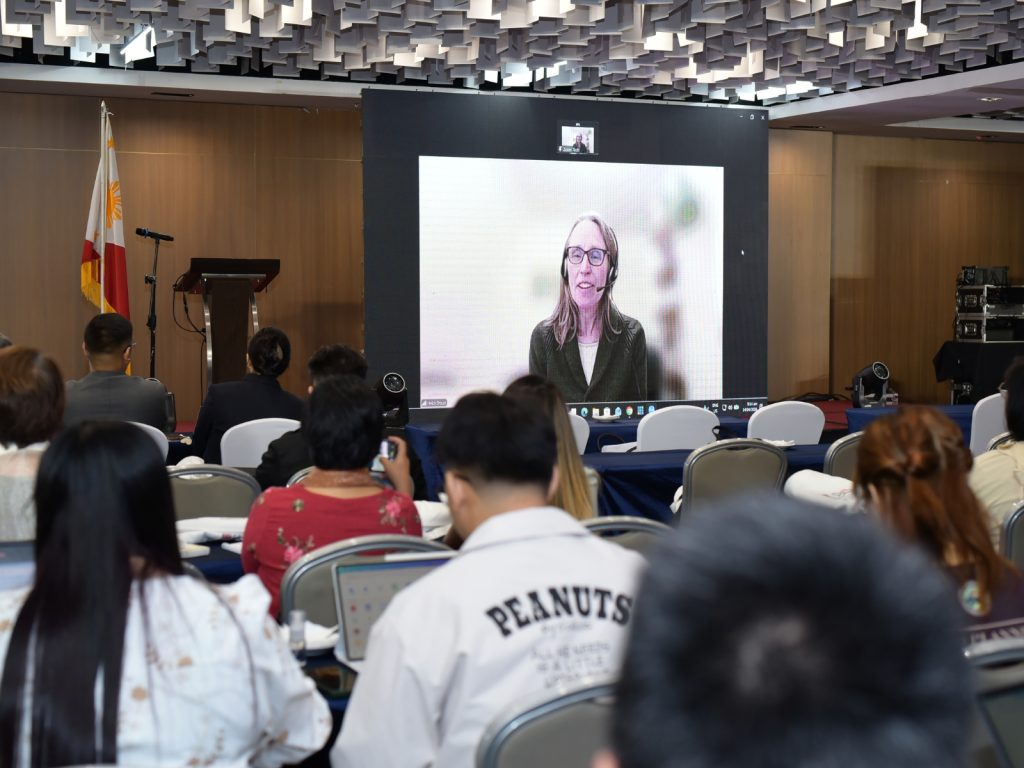
Heidi Braun, Senior Program Officer at the Climate Adaptation and Resilience (CLARE) Programme
Heidi Braun, Senior Program Officer at the Climate Adaptation and Resilience (CLARE) Programme, added, “I hope you gain a strong appreciation of the value of working in partnership and drawing on diverse forms of knowledge and experience.”
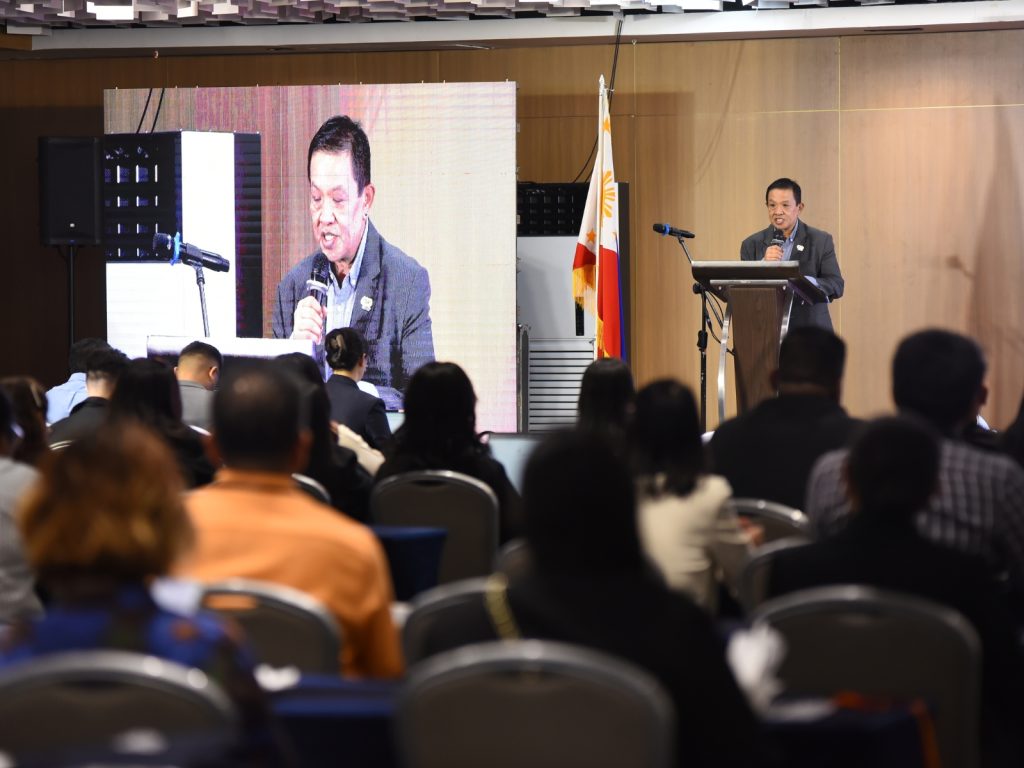
Victorino Aquitania, Regional Director of ICLEI Southeast Asia
Victorino Aquitania, Regional Director of ICLEI Southeast Asia, expanded on these themes. He said, “Across our region, cities face intensifying climate risks, widening inequalities, and growing pressures on natural and social systems. And yet, these challenges do not affect all people equally. The most vulnerable communities continue to bear the greatest burdens, even as they contribute the least to the causes of these crises. This is why our focus today—equitable and inclusive resilience—is not just timely. It is essential.”
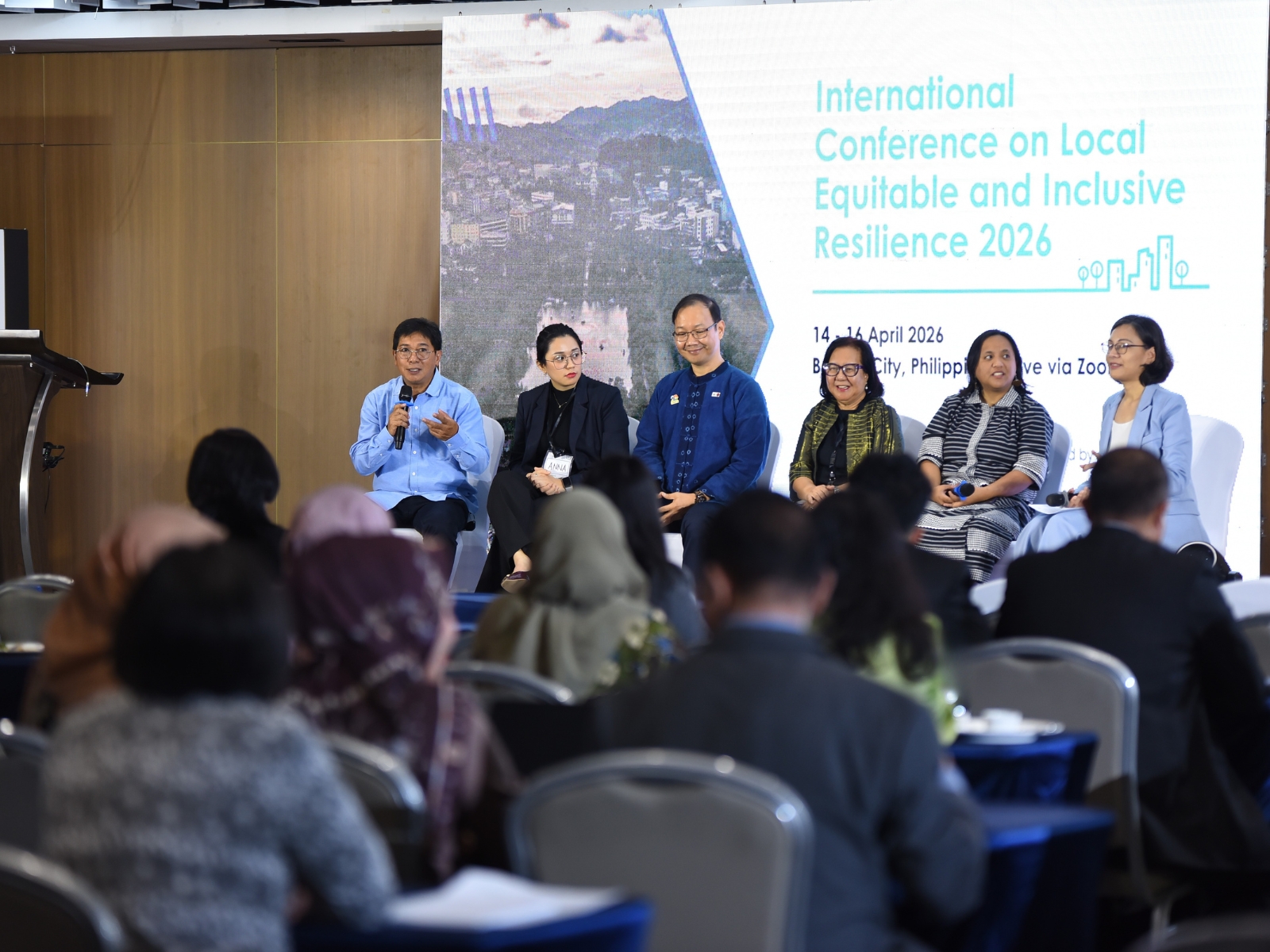 Panel session on Connecting Inclusive Local Resilience Action to National and Global Commitments. (from left) Engr. Benjamin Ventura, Assistant Regional Director for Technical Services of the Philippine Department of Environment and Natural Resources - Cordillera Administrative Region; Anna Mercaldi, Operational Focal Point to the Green Climate Fund of the Philippine Department of Finance; Oliver Agoncillo, Director of Mainstreaming - Biodiversity Division of the ASEAN Centre for Biodiversity; Atty. Violeta Seva, General Secretary of the Earthquakes and Megacities Initiative; Abigail Kitma, Coordinator of the Tebtebba Foundation; and Mae Valdez-Irong, Regional Program Manager of ICLEI Southeast Asia. Dr . Kristoffer Berse, Dean of the University of the Philippines - Diliman National College of Public Administration and Governance, joined virtually.
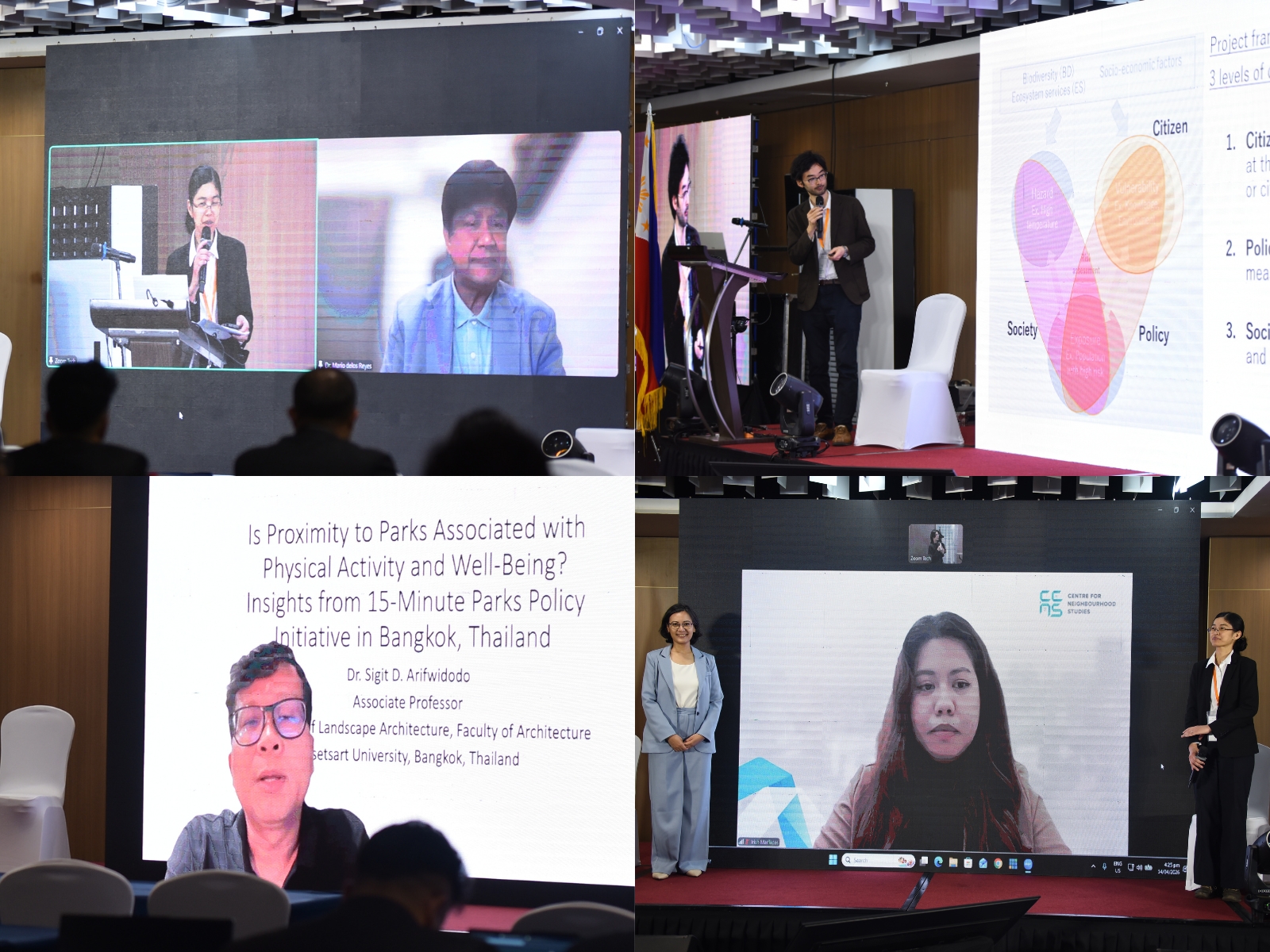
Day 1 sessions featured speakers from international organizations, national agencies, academia, and civil society organizations across Asia and included topics such as Connecting Inclusive Local Resilience Action to National and Global Commitments; Smart Resilience: Harnessing AI and Data Platforms; and Unraveling Urban Resilience Using the City Preparedness Index: Scientific Evaluation Method for Developing Policy and Action Networks. The discussions showed how global frameworks and data-driven approaches strengthen disaster preparedness and climate adaptation, while identifying practical paths to implement local resilience.
Putting inclusive governance into practice
Day 2 shifted to local implementation, with sessions on Local Leadership at the Frontlines of Inclusive Resilience; Inclusive Governance in Practice: Integrating Vulnerable Voices into Local Climate Action; Building Resilient Homes for All: Advancing Inclusive and Climate-Resilient Housing; and Peer Learning Labs: What Works, What Doesn’t, and Why.
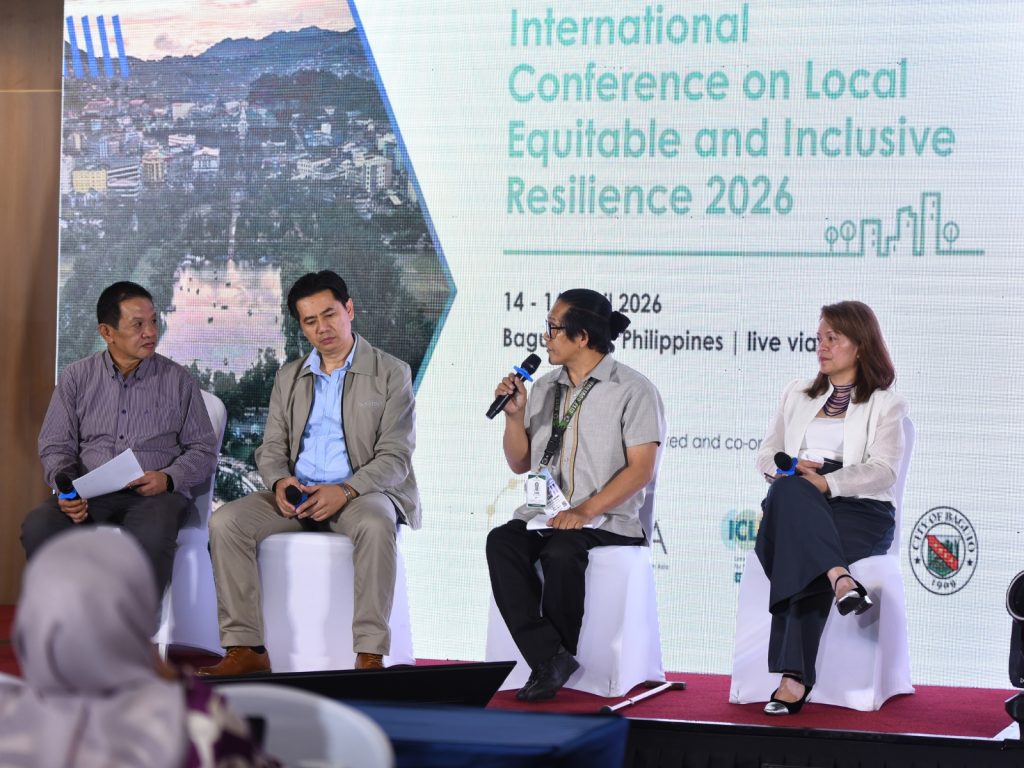
Panel on Local Leadership at the Frontlines of Inclusive Resilience. (from left) Victorino Aquitania, Regional Director of ICLEI Southeast Asia; Engr. Charles Carame, Baguio City Disaster Risk Reduction and Management Officer; Dr. Samuel Aquino, head of the Baguio Persons with Disability Affairs Office; and Architect Donna Tabangin, Baguio City Planning and Development Coordinator.
Baguio City’s department heads took the stage to share the city’s approach to inclusive resilience. Dr. Samuel Aquino, head of the Persons with Disability Affairs Office, set the tone with a simple statement: “Nothing about us without us.” Engineer Charles Carame, City Disaster Risk Reduction and Management Officer, explained how this principle translates to action: “Inclusive resilience begins with local leadership and succeeds through collective action. This means working across sectors instead of in silos.” Talking about the city’s vision “Baguio 2043: A Livable, Inclusive, and Creative City,” Architect Donna Tabangin, City Planning and Development Coordinator, also shared that “We need to make sure we are supporting inclusion in urban transformation. The marginalized have to be at the forefront of social services—no one has to be left behind.”
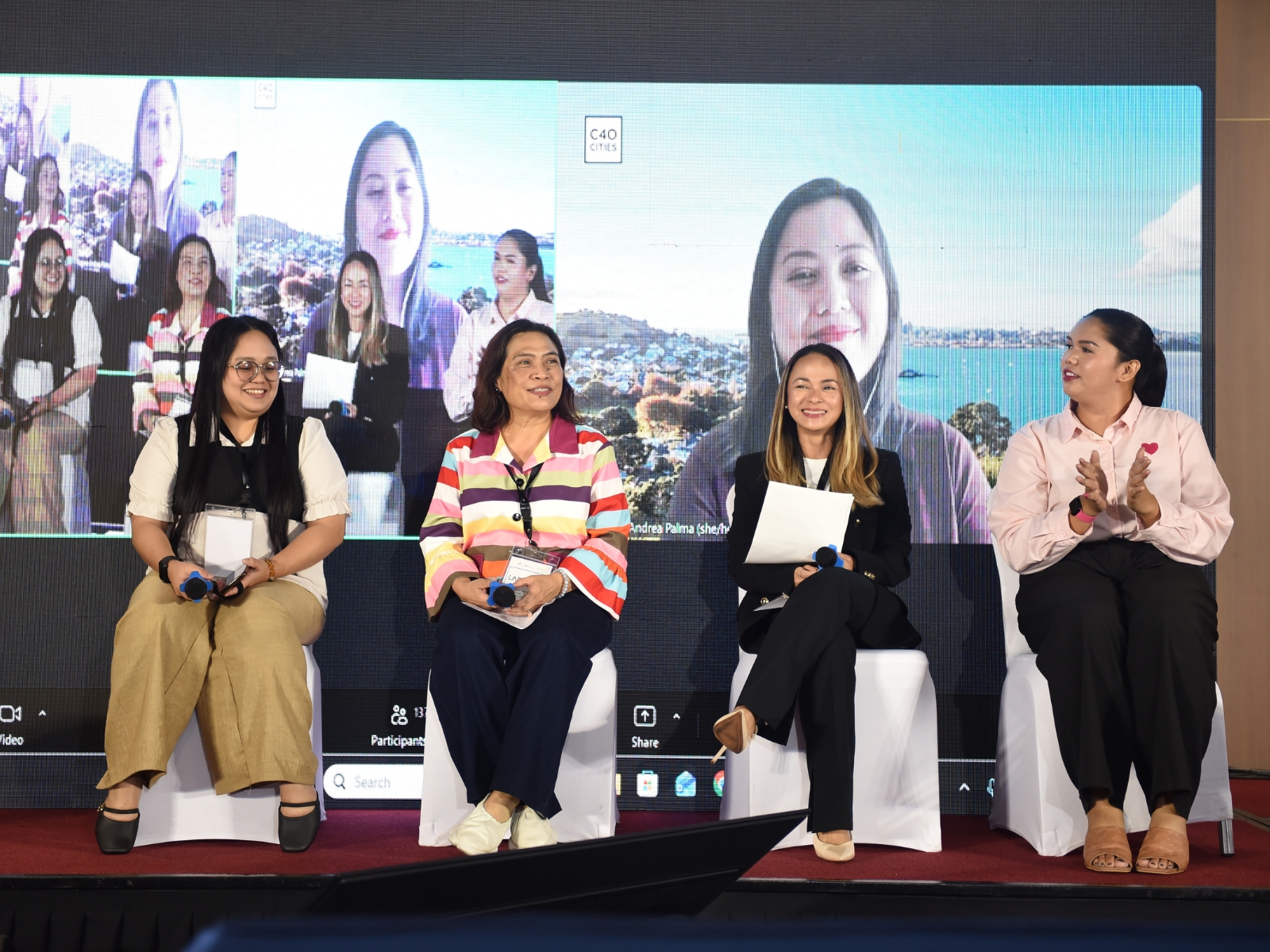
Panel on Inclusive Governance in Practice: Integrating Vulnerable Voices into Local Climate Action. (in-person, from left) Shiela Montezor, Administrative Aide I of the Antipolo City Planning and Development Office; Engr. Miladee Azur, Legazpi City Disaster Risk Reduction and Management Officer; Adrienne Arquillano, Executive Assistant to the Mayor of the Municipality of San Francisco; and Raymart “Ryl” Garcia, Youth Councillor of Barangay Commonwealth. (virtually, on right) Ragene Palma, Climate Adaptation and Resilience Advisor - Resilient Urban Futures of C40 Cities.
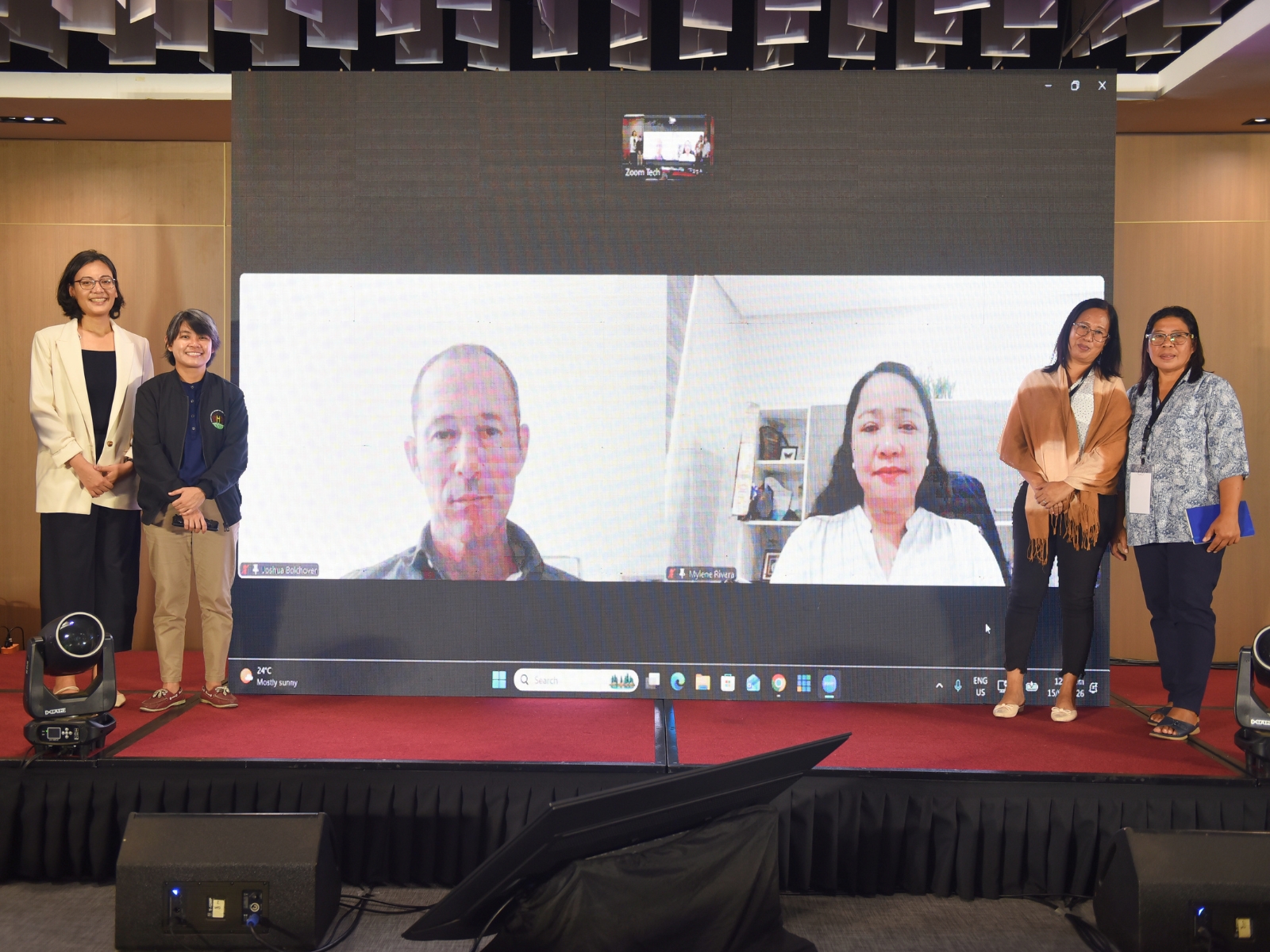
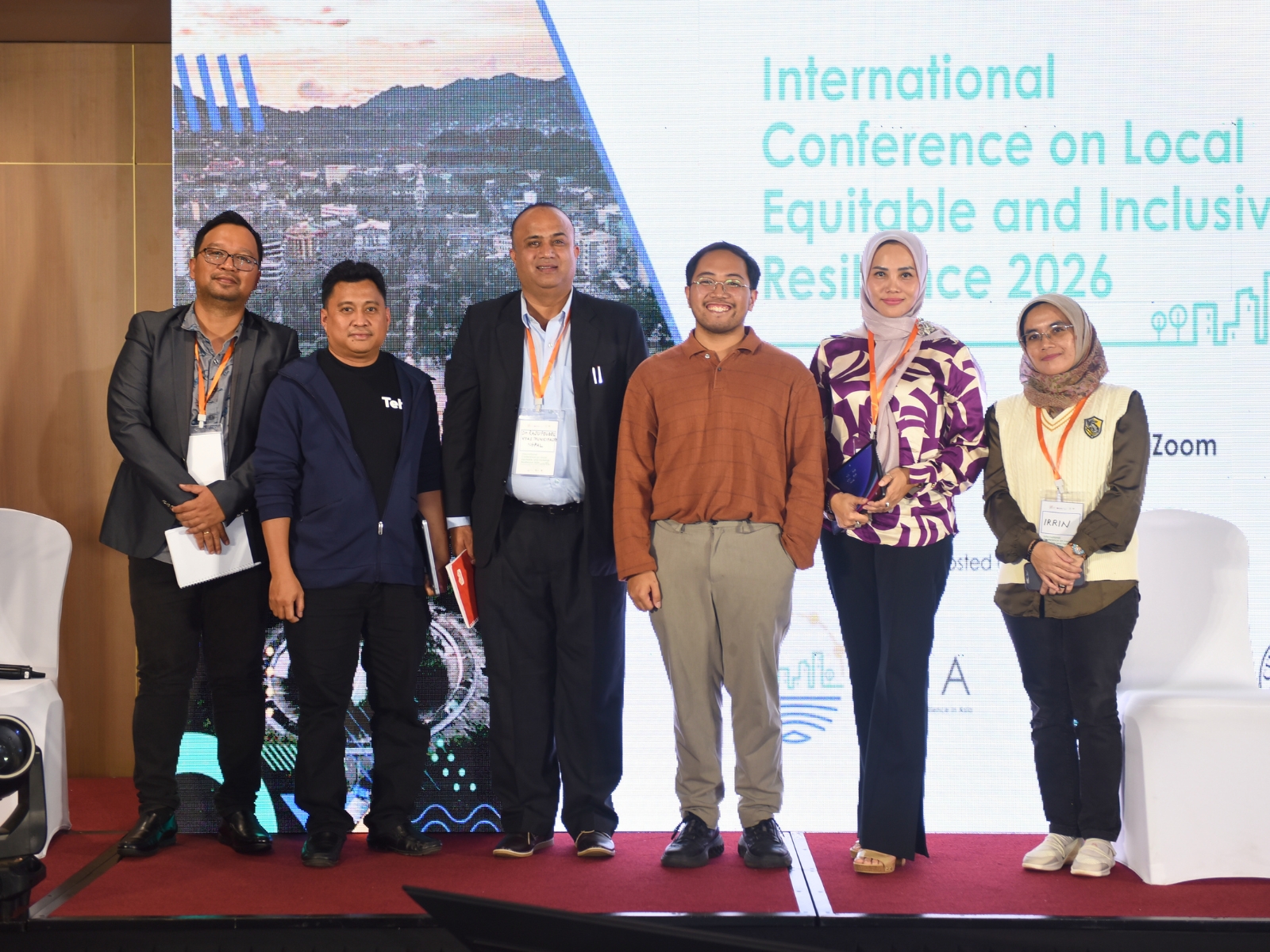
In an afternoon session, SIRA project participants from the Philippines, Indonesia, and Nepal led a peer-to-peer learning session, sharing practical lessons in collaborating with other local governments; enabling successful local climate action; and overcoming implementation challenges within their communities.
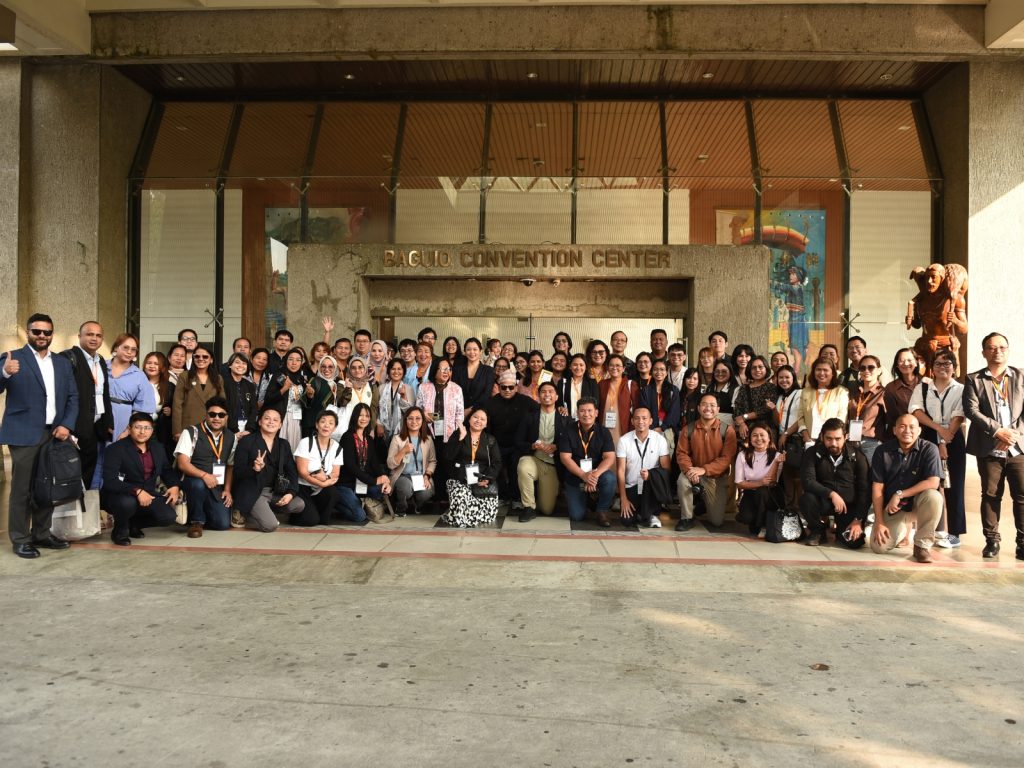
Participants of the Conference’s Study Tour at the Baguio City Convention Center which houses the Smart City Command Center and SIGLAT Youth Hub.
The second day ended with a site visit to the Baguio Smart City Command Center and SIGLAT Youth Hub, giving Conference participants a first-hand look at how data, technology, and youth engagement are utilized in centralized operations hubs toward sustainable urban development, safety, and emergency preparedness and response.
Across the day’s sessions, speakers emphasized that resilience cannot be achieved through infrastructure investments alone. Participants highlighted the importance of involving persons with disabilities, women, youth, indigenous peoples, and other marginalized groups in planning and decision-making processes to ensure climate actions address the needs of those most at risk.
Mobilizing finance and partnerships to realize resilience plans
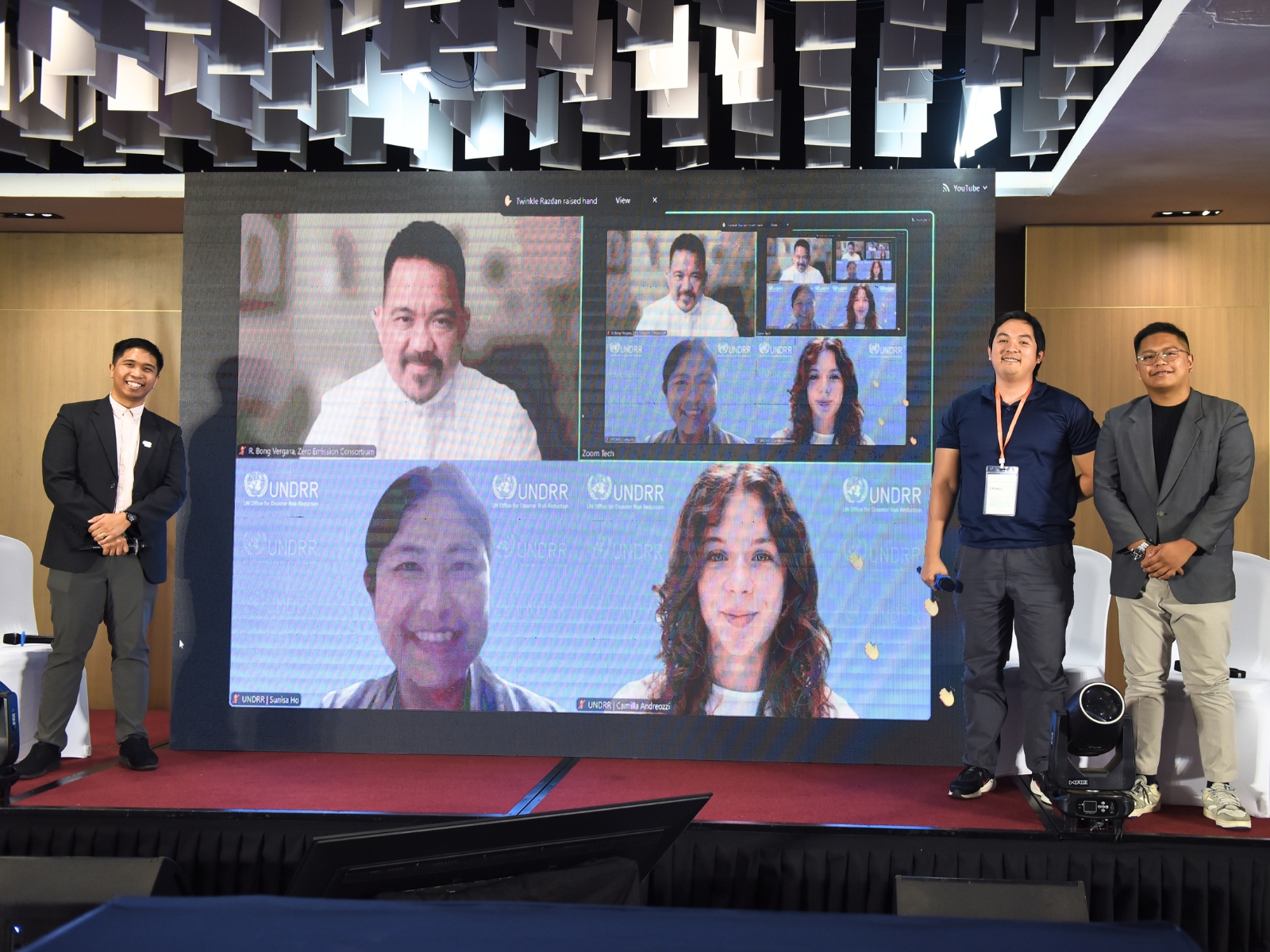
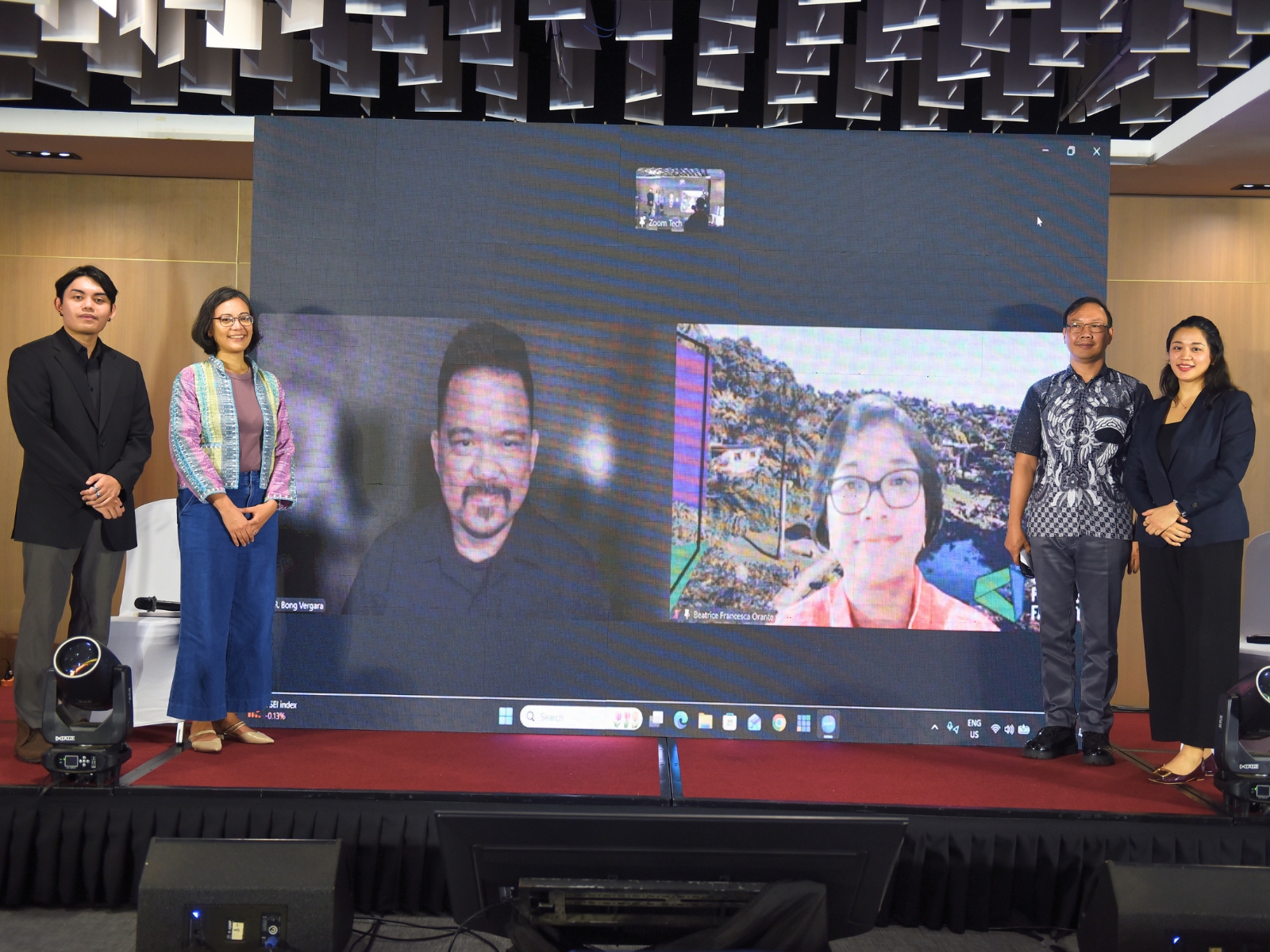 Panel on Financing Inclusive Resilience. (in-person, from left) Angelo Gotangco, Project Officer of ICLEI Southeast Asia; Mae Valdez-Irong, Regional Program Manager of ICLEI Southeast Asia; Oliver Agoncillo, Director of Mainstreaming - Biodiversity Division of the ASEAN Centre for Biodiversity; and Anna Mercaldi, Operational Focal Point to the Green Climate Fund of the Philippine Department of Finance. (virtually, from left) R. Bong Vergara, CEO of Youngmoon Inc.; and Beatrice Francesca Orante, Regional Engagement Manager for Asia of the C40 Cities Finance Facility.
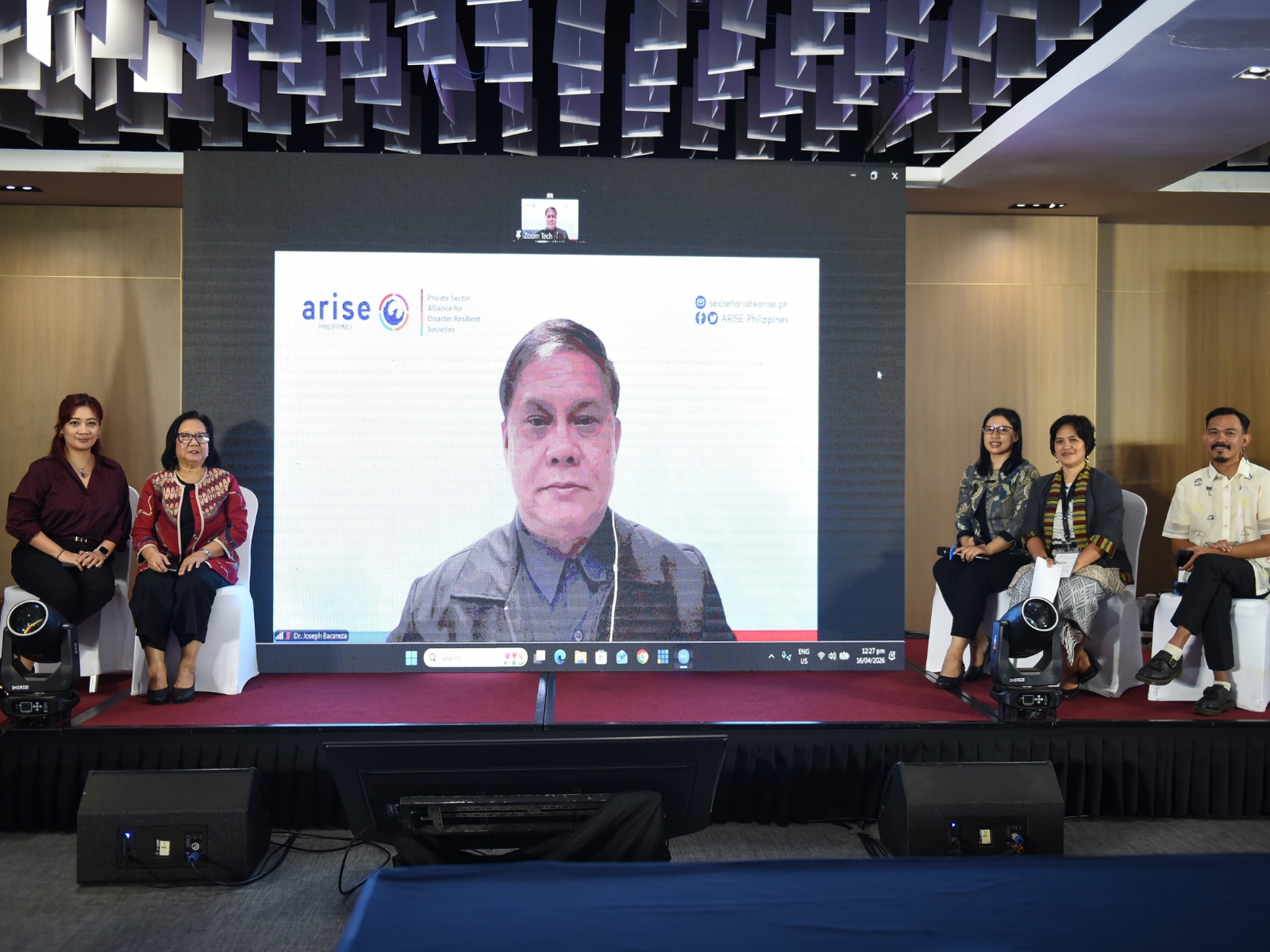
After discussing why inclusive resilience matters and how it can be implemented, the Conference turned its attention on the final day to one of the most persistent challenges facing local governments: financing. The morning plenaries on Financing Inclusive Resilience and Strengthening Multi-Stakeholder Partnerships for Inclusive Resilience examined innovative approaches and project preparation pathways that unlock funding, as well as the critical value of meaningfully engaging communities throughout the process from preparation to implementation to upkeep of resilience efforts.
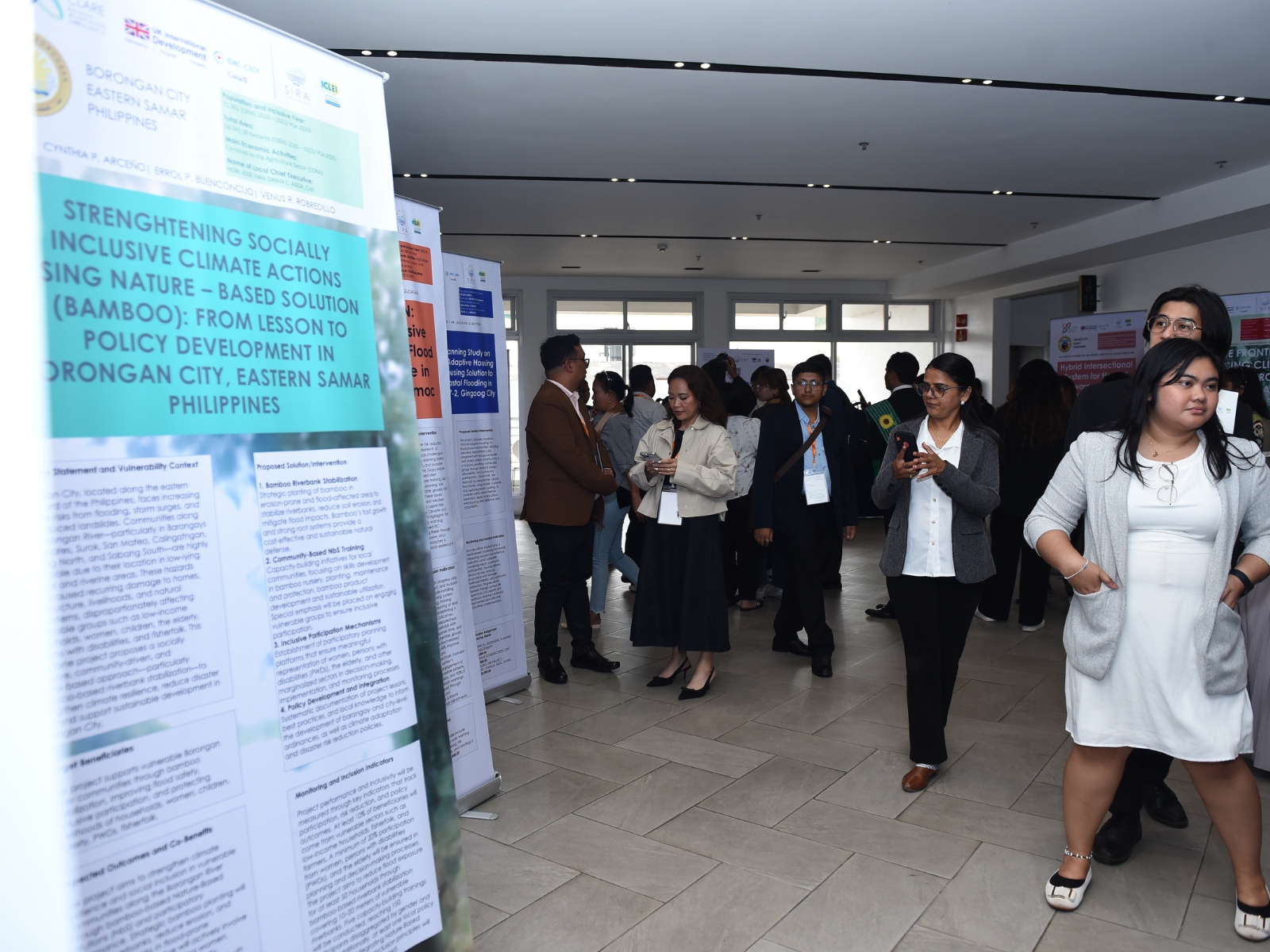
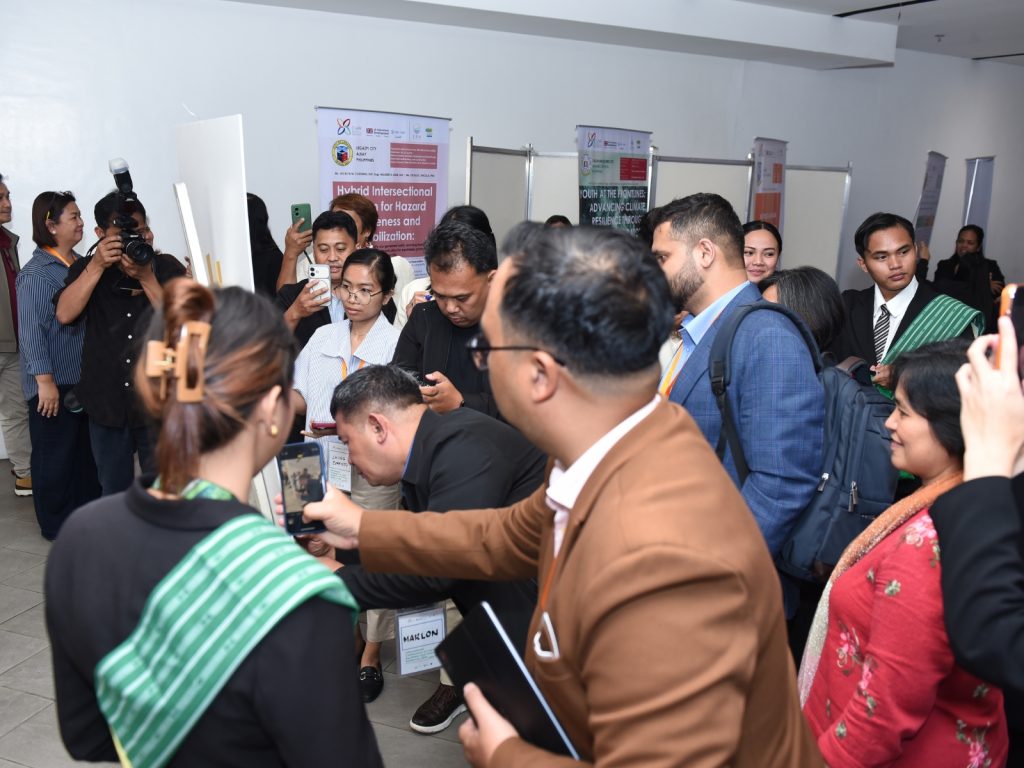
 As part of the Conference, SIRA project participants from the Philippines prepared project posters for their SIRA Fellowship capstone efforts and exhibited these during a Marketplace session at the end of Day 1.
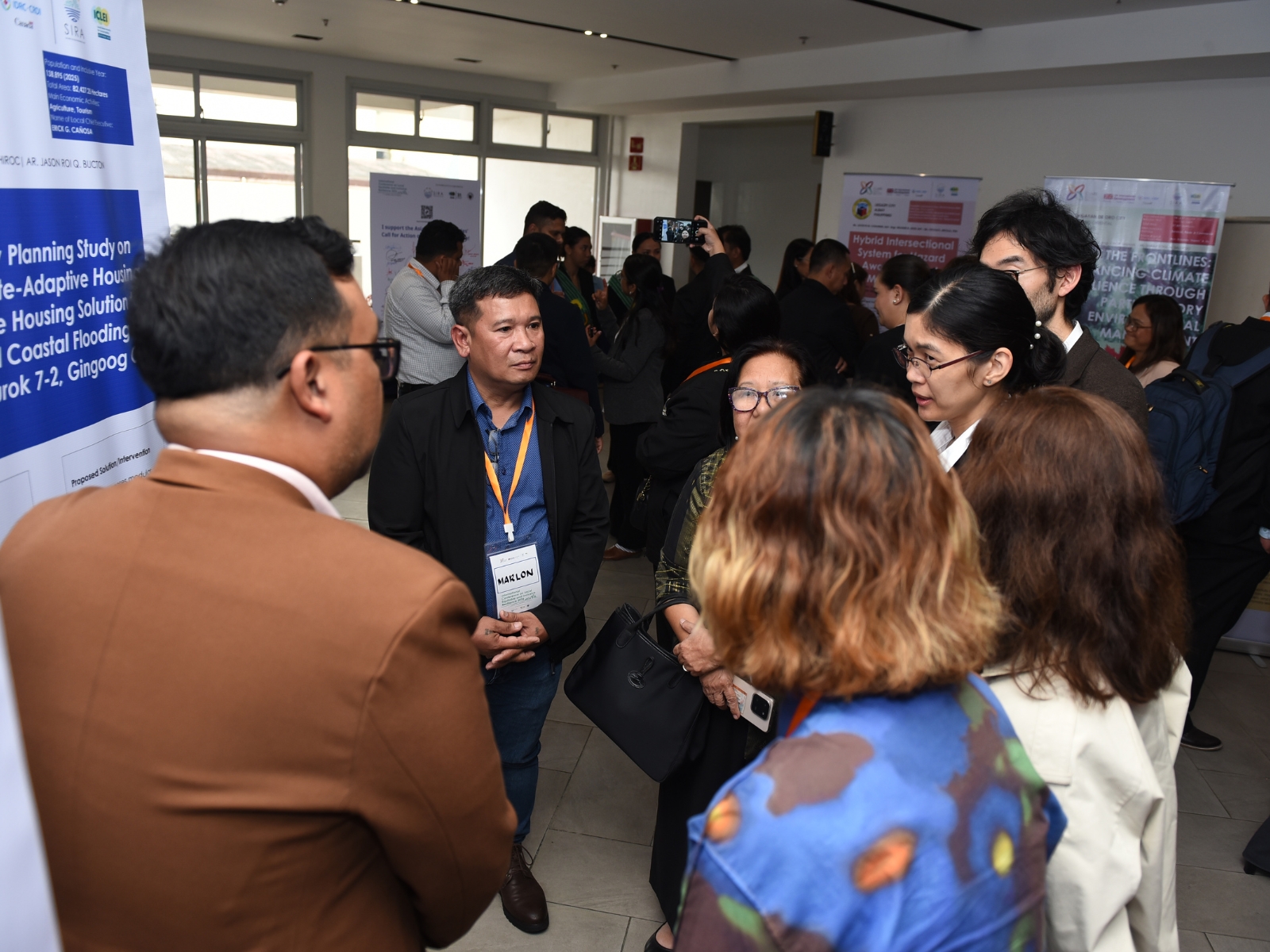
Meanwhile, in a parallel session, SIRA project participants from nine project cities in the Philippines pitched their resilience project concepts to representatives of financing institutions and project preparation facilities. They gained in-depth feedback on how their concepts can be refined and aligned with the current expectations and trends of global climate finance flows.
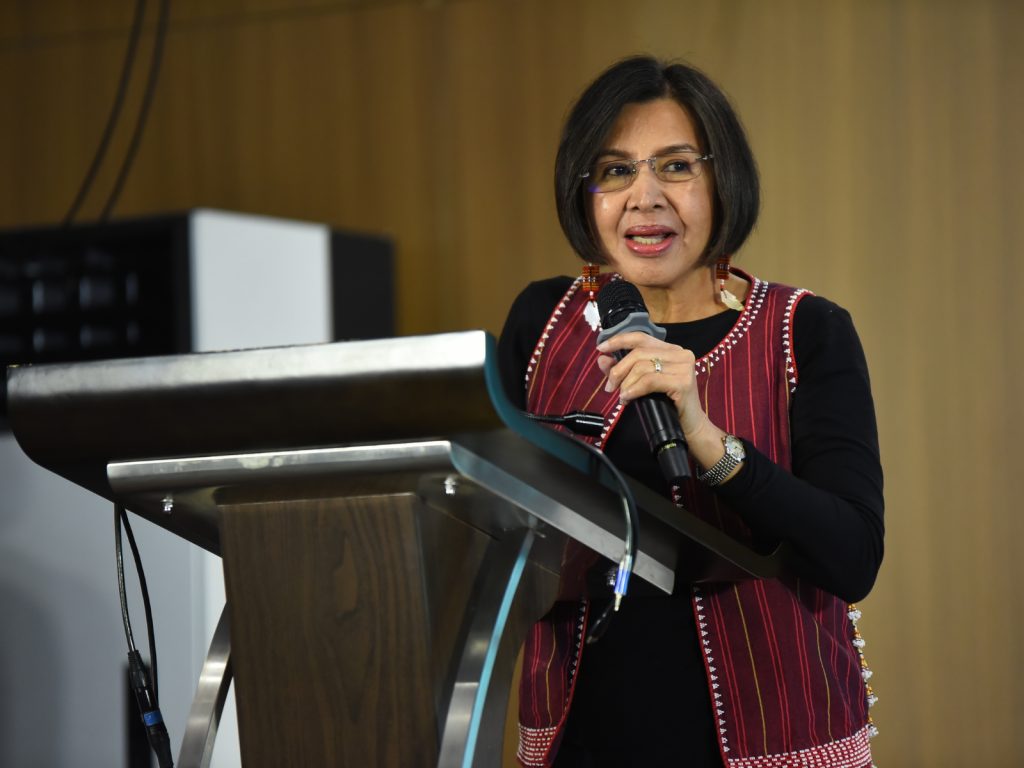
Atty. Leticia Clemente, Baguio City Budget Officer
Closing the Conference, Atty. Leticia Clemente, Baguio City Budget Officer, expressed the city’s appreciation for everyone involved. She said, “As we close this conference, may we carry forward more than just ideas. May we carry a renewed sense of purpose, because resilience is not built in isolation. Inclusivity is not achieved by intention alone. They are shaped through collaboration, trust, and sustained action. In the end, resilient and inclusive cities are not built by policies alone, but by people who choose again and again to come together to care and to act.”
A Historic Call to Action
Participants of the Conference signify their support for the Asian Local Authorities’ Call for Action on Inclusive Resilience.
One of the Conference’s highlights was the signing of the Asian Local Authorities’ Call for Action on Inclusive Resilience at the end of Day 1. The document, endorsed by participants, outlines 10 priorities to advance inclusive resilience, including: (1) Strengthening participatory governance to align local actions with national and global commitments; (2) Making climate finance more directly accessible to local authorities for inclusive resilience projects; (3) Investing in data systems for evidence-based planning; and (4) Fostering South-South cooperation to enable continuous peer learning and knowledge exchange.
The Call for Action serves as a rallying cry for local authorities, national governments, and partners to unite in a shared mission: “Together, we call on every local authority, national government, funding institution, and private sector partner to join us in this shared mission for inclusive resilience—where no one is left behind, and every voice matters.”
The Call remains open for digital signatures of support via https://tinyurl.com/AsiaCall4Resilience.
About the Conference
The International Conference on Local Equitable and Inclusive Resilience is the flagship event of the Enhancing Local Capacities in Socially Inclusive Resilience in Asia (SIRA) Project, implemented under the Climate Adaptation and Resilience (CLARE) Programme funded by UK Aid through the Foreign Commonwealth and Development Office (FCDO) and the International Development Research Centre (IDRC), Canada.
An ICLEI member since the 1990s and a newly-declared Resilience Hub by the United Nations Office for Disaster Risk Reduction’s Making Cities Resilient 2030 (UNDRR-MCR2030) campaign, Baguio City has an established track record in disaster risk reduction and resilience. It is also committed to supporting, mentoring, and enhancing peer-to-peer learning among local governments within the Philippines and beyond, helping enhance resilience against climate change from the ground up.
Baguio City is also part of the SIRA project in the Philippines.
The Conference live stream can be rewatched via the ICLEI Southeast Asia YouTube page at https://www.youtube.com/@ICLEISEAS/streams or via this YouTube playlist.