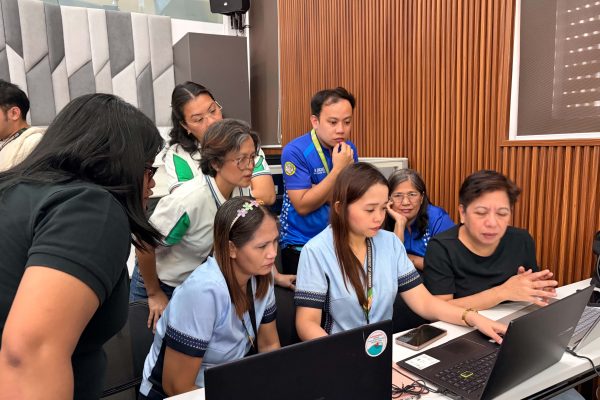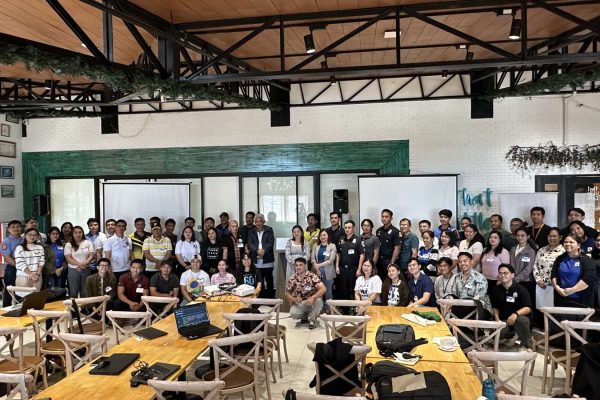
Local government representatives from Indonesia, Malaysia, and the Philippines shared how climate reporting can help cities organize fragmented data, coordinate departments, and inform planning during an ICLEI Southeast Asia webinar on 18 August 2026.
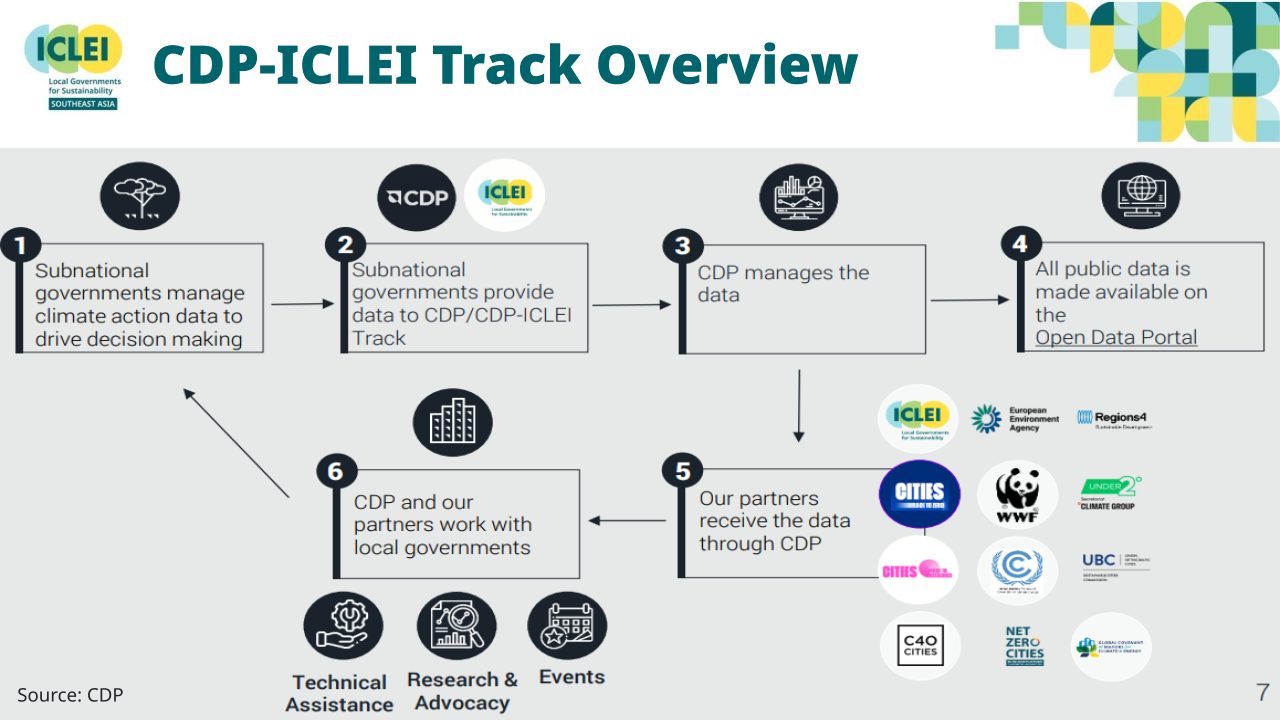
The webinar introduced the CDP-ICLEI Track 2026 reporting cycle, including its questionnaire, submission process, timeline, and available technical support. The free and voluntary Track platform enables cities, states, and regions to disclose data on climate governance, risks, greenhouse gas emissions, targets, plans, and actions through a standardized questionnaire.
Pamela Cabacungan, Zero Emissions Portfolio Manager at ICLEI Southeast Asia, and Femme Sihite, Project Officer at ICLEI Indonesia, explained how the platform allows local and regional governments to evaluate their progress, identify information and investment gaps, and report to multiple climate initiatives without preparing separate submissions for each—all in a guided and accessible manner.
Dr. Mitta Ratna Djuwita, Director of GHG Inventory, Monitoring, Reporting, and Verification (MRV), and Deputy for Climate Change Control and Carbon Economic Value Governance at Indonesia’s Ministry of Environment, connected local reporting to national climate commitments.
“The value of local climate data, therefore, goes beyond reporting. It enables better planning, better decisions, and ultimately better climate action,” she said. For local data to contribute to national systems, she added, it must be consistent, reliable, comparable, and traceable. Dr. Djuwita also emphasized that rather than adding separate reporting layers, existing city data must be used innovatively and effectively across various levels of government.
City speakers then discussed how these principles work in practice. Hermaliana, Planner for Infrastructure and Regional Development in Probolinggo City, explained that much of the city’s climate information already exists across different agencies. The challenge is consolidating data with different formats, owners, and reporting periods into one evidence base that can support local development planning, national MRV, and international reporting.
In Malaysia, Amira Binti Ahmad, Head Assistant Director of the Urban Services Department of Seberang Perai City Council, described how her department coordinates data from municipal departments and external organizations. She said CDP-ICLEI Track participation has helped the city identify information gaps and improve its internal coordination and reporting processes.
Jim Honrejas, Climate Change Adaptation and Mitigation Focal Person of Makati City, advised first-time reporting cities to begin early, establish a dedicated team, and use the reporting process to identify gaps and improve future planning. He also encouraged cities to work with available local data rather than wait for a perfect dataset.
For the 2026 cycle, responses submitted by 16 September are eligible for CDP scoring. Local and regional governments may submit unscored responses until 26 October.
A replay of the webinar can be accessed HERE.