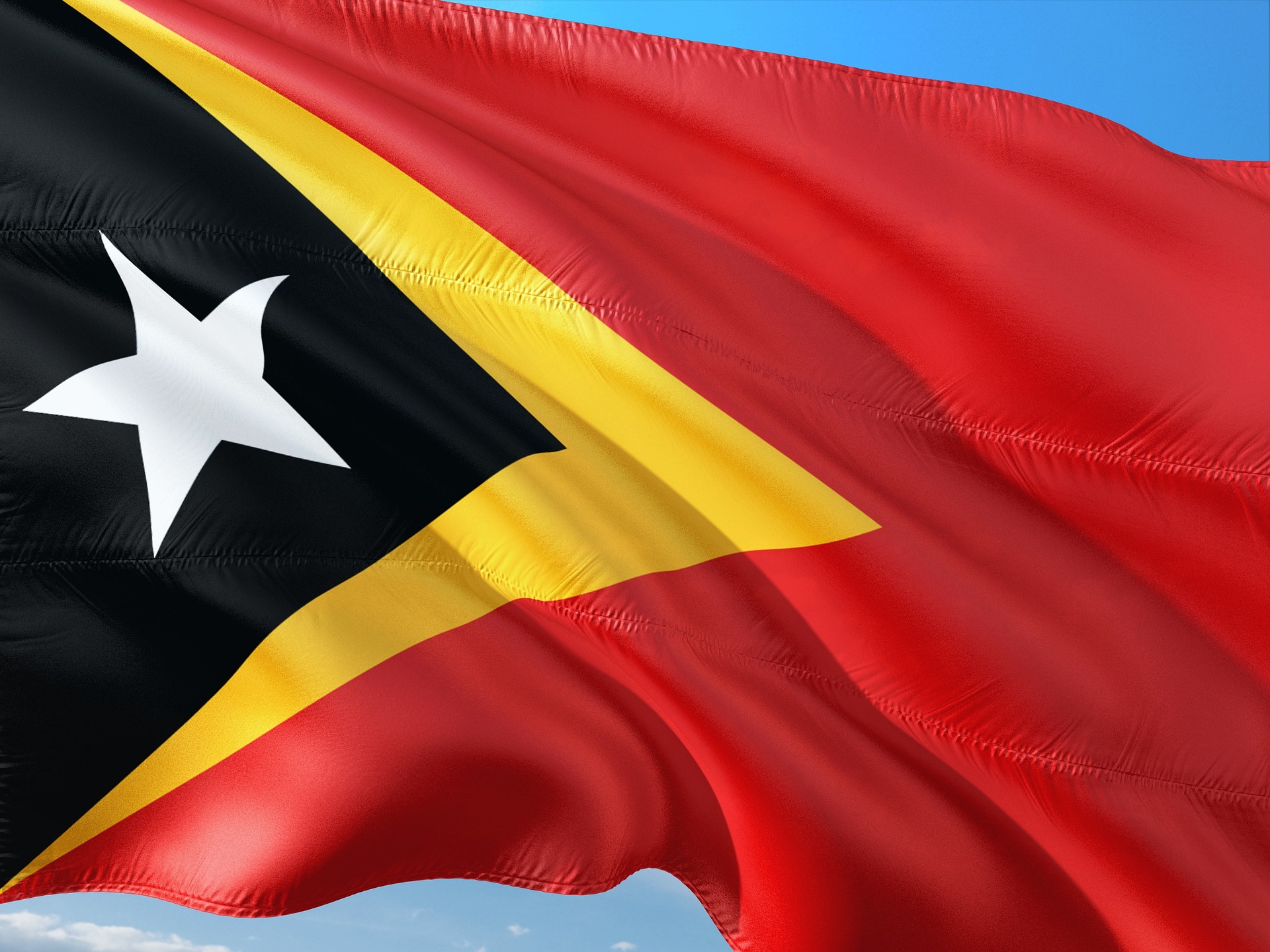
Image by jorono from Pixabay
The Association of Southeast Asian Nations (ASEAN) officially welcomed Timor-Leste as its 11th member in October 2025, opening more opportunities for partnerships in the region’s pursuit of sustainable development.
Located on the east of Timor Island, the Democratic Republic of Timor-Leste is a country on the southernmost edge of the Indonesian archipelago, northwest of Australia. It is one of the smallest countries in Asia and one of the least populated, yet it holds a rich cultural heritage, history, and biodiversity.
Learn more about Timor-Leste with these quick facts:
- Dili is the capital city: Timor-Leste’s capital city, Dili, is a coastal city under the Dili Municipality and serves as the country’s political and economic center.
- Local governance in Timor-Leste: Timor-Leste is divided into 13 municipalities (municipios)—which are administrative regions—and one special administrative region, Atauro Island. Each municipality is led by an elected mayor and vice-mayor. A municipality is subdivided into administrative posts, with one designated as the capital. Under an administrative post are sucos (suco can also be spelled as ‘suku’), which are equivalent to villages. A suco is further divided into aldeias (hamlets), the smallest official administrative division in Timor-Leste.
- A young country with a young population: Timor-Leste is the youngest country in Asia, having become sovereign in 2002. It is also the country with the youngest population in Southeast Asia, with roughly 74% of the population being under 35 years of age.
- A home to highly biodiverse ecosystems, both on land and in water: Timor-Leste is located within the Coral Triangle, a region that is the richest center of marine biodiversity on the planet, with over 6,000 species of fish, 76% of the world’s coral species, and an array of wildlife. According to the Coral Triangle Center, surveys of Timor-Leste’s coral reefs indicate that they are home to more than 1,200 species of reef fish and 400 reef-building coral species. The country is also located within Wallacea, one of the world’s largest centers of endemism, since more than half of the hotspot’s mammals, 40% of birds, and 65% of amphibians do not occur outside the hotspot.
- Its name translates to “East East” in English: Timor-Leste comes from the Malay word “Timur” which means “East” in English, and the Portuguese word “Leste” which also means “East.”
- Committed to climate risk governance, nature-positive growth, low carbon development, and resilience building: Timor-Leste’s Nationally Determined Contribution (NDC) 2022-2030 details the country’s four commitment areas directing its climate action plans and strategies: (1) Climate Risk Governance, (2) Nature-Positive Growth and Transition, (3) Low Carbon Development, and (4) Climate Change Adaptation and Resilience Building.