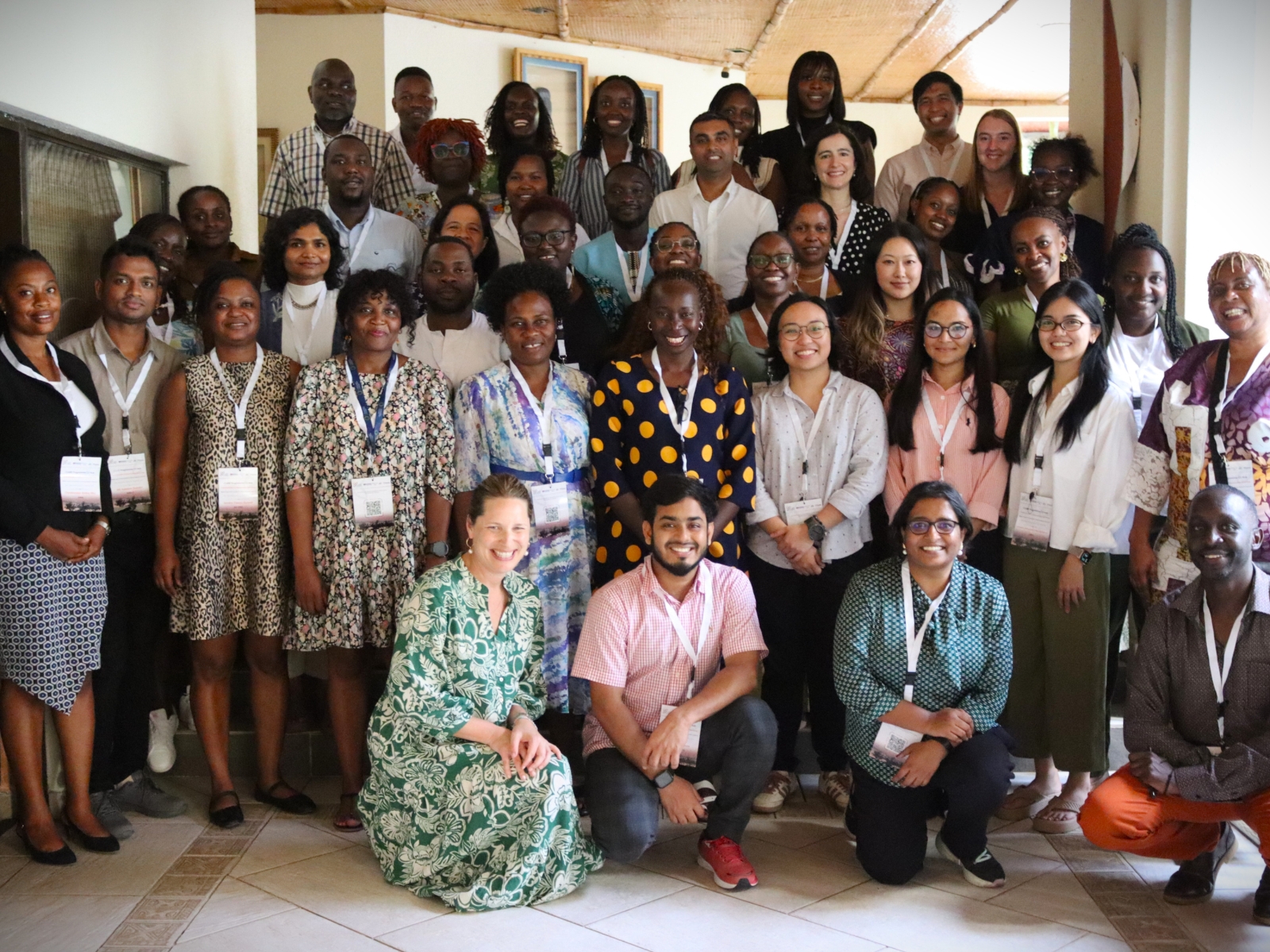
(in photo above) Participants of the CLARE CS Hub Communications and Dissemination Training Workshop
The CLARE CS Hub Communications and Dissemination Training Workshop in Diani, Kenya, from 1–5 December 2025 brought together climate researchers, practitioners, and communications to strengthen climate adaptation communication. ICLEI Southeast Asia joined the Workshop through its implementation of the Enhancing Local Capacities In Socially Inclusive Resilience In Asia (SIRA) Project as represented by its Communications Head, Chris Noel Hidalgo, and Communications Assistant, Jameela Antoniette Mendoza, with Hidalgo also facilitating the session’s policy messaging theme.
Below are five key lessons from the Workshop.
Communications work best when co-created with communities
The most effective messages are not merely transmitted from the top down, but built with the people they are meant to reach. The Workshop showed how mapping stakeholders and meaningfully understanding their realities ensures evidence is not just shared but contextualized by those who stand to gain the most from it. Vulnerable sectors each have unique perspectives on the climate emergency and how they experience it; involving them early and throughout the communications process makes messages clearer, more relevant, and more likely to drive action.
Media are partners, not just messengers
Treating journalists as collaborators rather than mere recipients of press releases transforms how climate stories are told. The Workshop highlighted that media engagement should start early, with co-created narratives that reflect both research and lived experiences. This approach builds trust, ensures accuracy, and helps reach audiences that researchers alone cannot.
Policy windows are opportunities for impact
Communications can shape policy when they align with the right moment. The Workshop emphasized that policy change happens when problems, solutions, and political will converge. Recognizing these windows, knowing the key policy actors for each, and preparing resonant messages that steer these towards alignment allows communicators to meaningfully influence climate-related decisions and actions before they are finalized.
Every story must answer “so what?”
Good communication cuts through the noise by focusing on what matters. The Wokshop stressed that every piece of information should connect to a clear purpose. Whether for policymakers, communities, or media, repeatedly asking the question “so what?” helps distill complex research into messages that resonate and motivate action.
GEI-sensitive communications go beyond representation
True inclusion means more than just featuring women or marginalized groups in stories. The Workshop’s Gender Equality and Inclusion (GEI) sessions showed that communications must challenge stereotypes, address power imbalances, and ensure accessibility. This means checking language, visuals, and formats to avoid reinforcing exclusion and to make sure all voices are heard with dignity.
Overall, the Communication and Dissemination Workshop reminded participants that strong communication is not merely about broadcasting information and reaching the widest audience possible, but about building connections. By co-creating messages, partnering with media, seizing policy moments, focusing on relevance, and centering inclusion, climate research can be turned into action that truly makes a difference.