-
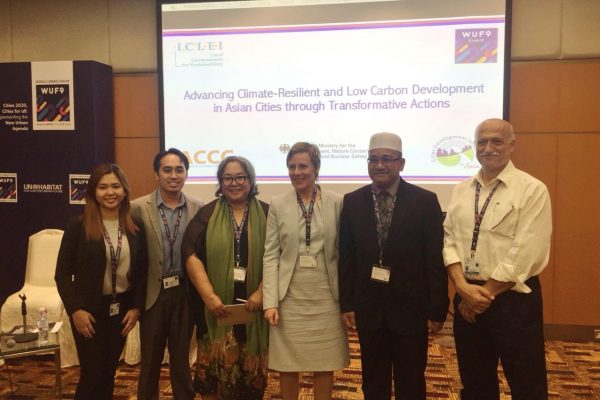
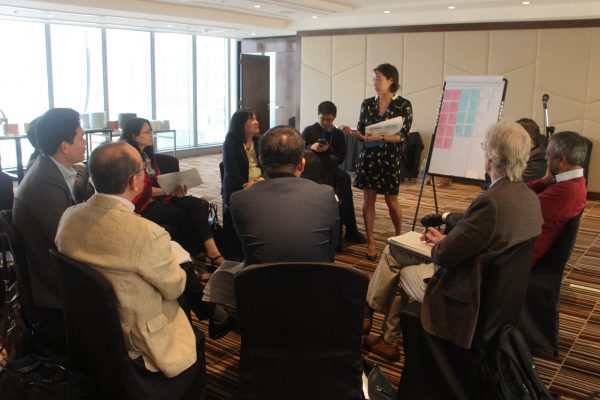
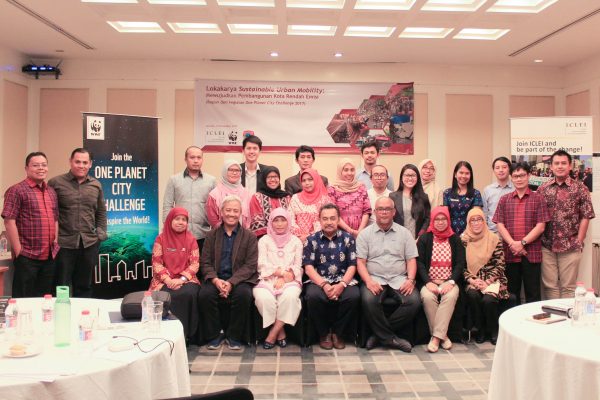
Local governments, CSOs, and NGOs discuss strategies for NDC achievement in Indonesia
Jakarta, Indonesia: Yayasan ICLEI –…
Continue reading -
Forests and Landscapes in Indonesia
By: WRI INDONESIA Data-driven analysis to support government and civil society actions for effective and equitable land-use in Indonesia. This project includes work formerly known as Project POTICO. Indonesia is the world’s fifth largest emitter of greenhouse gases, mainly due to the conversion of its forests and carbon-rich peatlands. These shifts in land use have ecological and social consequences, as Indonesia’s forests are home to thousands of plant and animal species, and 50-60 million Indonesians depend directly on the forests for their livelihoods. Recognizing the domestic and international importance of its tropical landscape and the people in it, the Indonesian government has made encouraging decisions; it has voluntarily committed to a minimum 26% reduction in greenhouse gas emissions by 2020 and developed a strategy for land use and forestry emissions, extended a moratorium on new clearing of primary forests and peat lands from 2 to 4 years (2013-2015), and increasingly recognized the rights of forest communities and indigenous peoples. Indonesia must balance these environmental and social goals with a rapidly growing economy based on natural resources and corporate interests. The Forests and Landscapes in Indonesia team works with all stakeholders in Indonesia’s forests to support decisions and management that is profitable and sustainable. Our work includes: generating environmental and governance data on natural resource specifically regarding forest lands;making these data available via interactive maps, reports and other tools;interpreting these data in the Indonesia policy context;working with government and civil society to improve forest monitoring;working with industry to enable sustainable expansion of key commodities;conducting capacity building to catalyze change on the ground.Explore our free and easy-to-use interactive tools: The Suitability Mapper enables users to identify potentially suitable sites for sustainable palm oil production in Kalimantan and Papua, Indonesia. The Forest Cover Analyzer enables users to assess forest cover change and risks related to sustainable palm oil production in areas of their choice in Kalimantan, Indonesia. Or learn more about the concept behind our work on palm oil in Indonesia here.
Continue reading -
Indonesia plants bamboo to fight climate change
By: The Jakarta Post Cultivating bamboo could help Indonesia mitigate the impacts of climate change, an Indonesian environmental scientist said during a side event of the United Nations climate conference in Bonn, Germany. At the event, Arief Rabik, founder of the Bambu Lestari Foundation, said planting bamboo was a very effective way to rehabilitate degraded land and absorb and store carbon dioxide, adding that citizens could reap economic benefits from cultivating the plant. The discussion was held on Tuesday at the Indonesia Pavilion set up by the Indonesian delegation at the UN Climate Change Conference ( COP23 ), which runs from Nov. 6 to 19. One cluster of bamboo could store up to 5,000 liters of waters, demonstrating its role in soil water management. Meanwhile, one hectare of bamboo could absorb up to 50 tons of greenhouse gases per year. Bamboo can also be cultivated in a wide range of soil types, making it easy for locals to manage. "Bamboo is the winner when it comes to rejuvenating degraded land," Arief said as quoted by a statement released by the Environment and Forestry Ministry. Arief, however, said bamboo still had a low economic value compared to other plants. In fact, he said, bamboo could be harnessed to produce products ranging from textile fiber to panels for construction. Arief said his group, with the help of the ministry, was working on a project to cultivate bamboo in 1,000 villages across Indonesia. It is hoped that each village can cultivate at least 70,000 bamboo seeds. Desi Ekawati, a researcher with the ministry's research and innovation development agency, said her team was developing a new bamboo cultivation method to help spur Arief's 1000 bamboo villages project. Called "spartan seedling," Desi said the method could cut the period before harvest from eight or nine months to two or three months. (ahw)
Continue reading -
Penang, Malaysia Mayor to be the next director of UN Habitat
Photo Credit: (Christopher Swope), Citiscope On December 20, United Nations Secretary-General António Guterres informed the United Nations General Assembly of his intention to appoint Dato’ Maimunah Mohd Sharif as the next Executive Director of the United Nations Human Settlements Programme (UN-Habitat). The decision came after a series of consultations with the Chairpersons of the regional groups of UN’s Member States. Ms. Sharif is the current Mayor of Penang City Council in Malaysia. Before becoming the local chief executive of Penang City, she was the first female president of the Municipal Council of Seberang Perai. She led Seberang Perai to attain its vision, “To make Seberang Perai cleaner, beautiful, comfortable place to stay, work, investment and tourist attraction by 2018”; having been able to produce its first Tourist Map, Heritage Trail, and Coffee Table Book. A staunch advocate of inclusive planning, development, and administration, she uses the Gender Responsive Participatory Budgeting process in preparation of the city’s annual budget. She has also formed a committee tasked to integrate gender perspectives into the local governance process. She is a prolific figure in international and local conferences and has been awarded recognition by the Penang State Government, Malaysian Government, and international organizations. The Malaysian Institute of Planners lauded her as Planner of the Year in 2014. In the same year, she was given the award, Darjah Setia Pangkuan Negeri, bestowing the title Dato. Dato’ Maimunah Mohd Sharif during ICLEI SEAS' session at the ASEAN Mayors Forum 2017 as she talked about lessons and experience in transforming Seberang Perai into a low carbon town. Her involvement with ICLEI sprawls many years; in 2014 she was elected as one of the members of the Regional Executive Committee of ICLEI Southeast Asia. On December of the same year, she was voted as the region’s representative to ICLEI’s Global Executive Committee. On October 18, 2016, citing her work on Seberang Perai’s sustainable planning, she received the Global Human Settlements Outstanding Contribution Award—presented by the Global Forum on Human Settlements on Quito, Ecuador during the UN Conference on Housing and Sustainable Urban Development (Habitat III).
Continue reading