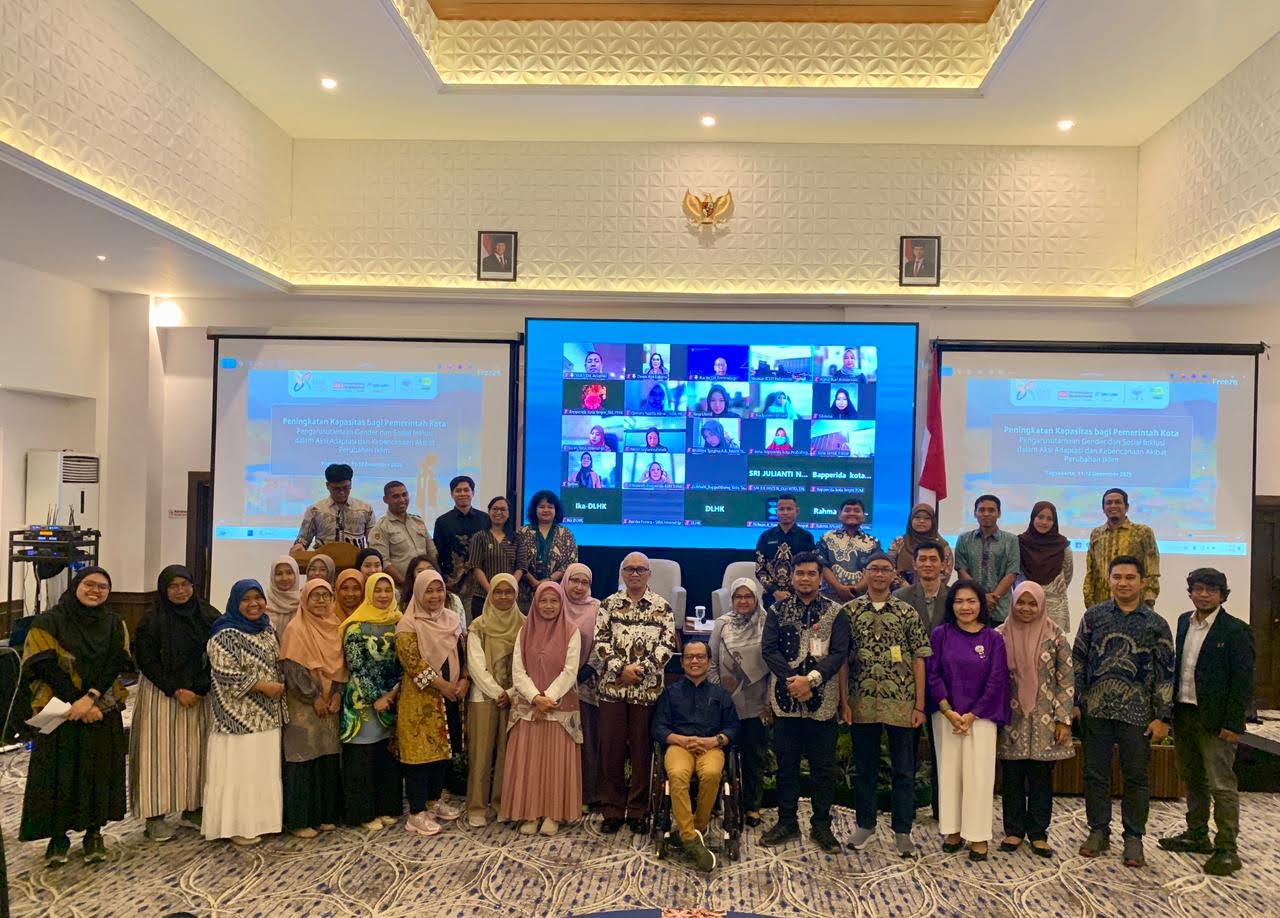
More than 50 local government participants, including representatives from key national ministries, joined both online and in person on 19 December 2025 for the first SIRA Training in Yogyakarta.
This post also appears on the CLARE website.
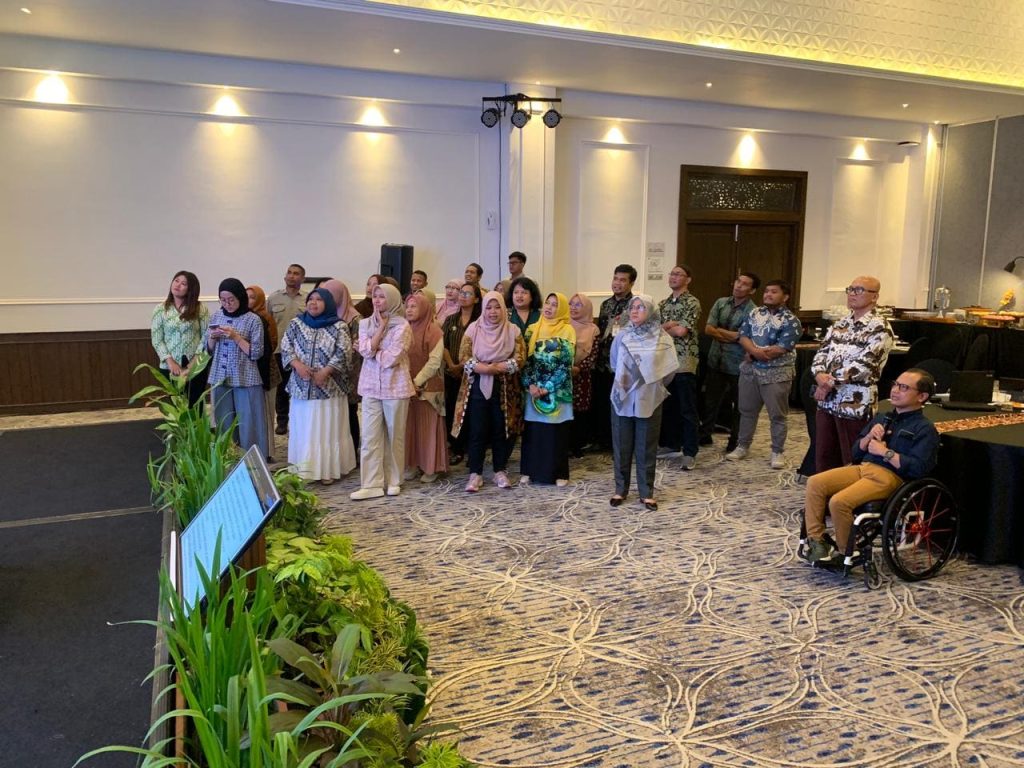
The Sendai Framework (2015-2030) places inclusion at the heart of disaster risk planning, with gender-based vulnerabilities and social inequities requiring critical integration. Within this context, ICLEI Indonesia gathered 15 local governments (LGs) from across the country on 19–20 December 2025 for a Gender Equality, Disability, and Social Inclusion (GEDSI)-focused training to drive systemic change and strengthen inclusive climate and disaster governance.
Thirteen cities, including Bandung, Bogor, Cirebon, Semarang, Probolinggo, Jambi, Tanjungpinang, Medan, Pekanbaru, Tarakan, Bontang, Yogyakarta and Balikpapan, convened in-person in Yogyakarta for a two-day capacity-building training on Gender Equality, Disability, and Social Inclusion (GEDSI) in climate adaptation and disaster risk reduction.
Banda Aceh and Langsa cities also participated in the training virtually.
Organized under the Enhancing Socially Inclusive Resilience in Asia (SIRA) project, the capacity-building session tackled how local governments can integrate systemic change into urban development, ensuring that climate and disaster policies are inclusive, equitable, and responsive to the needs of all communities.
Its core aim was to integrate GEDSI into climate and disaster policies so that vulnerable groups—including women, persons with disabilities, children, the elderly, and marginalized communities—are meaningfully included in planning, budgeting, and implementation.
Nearly 50 LG staff participated, primarily from environmental and regional development agencies, with more than half of the attendees being women in decision-making and planning roles. Their active engagement demonstrates how local leadership can transform governance structures, embed GEDSI in planning and budgeting, and create lasting systemic impact across cities.
“Inclusive climate action is not optional—it is fundamental to effective adaptation and disaster risk reduction,” said Arif Wibowo, Country Manager of ICLEI Indonesia, highlighting that local governments are key drivers of building resilient and equitable urban communities.
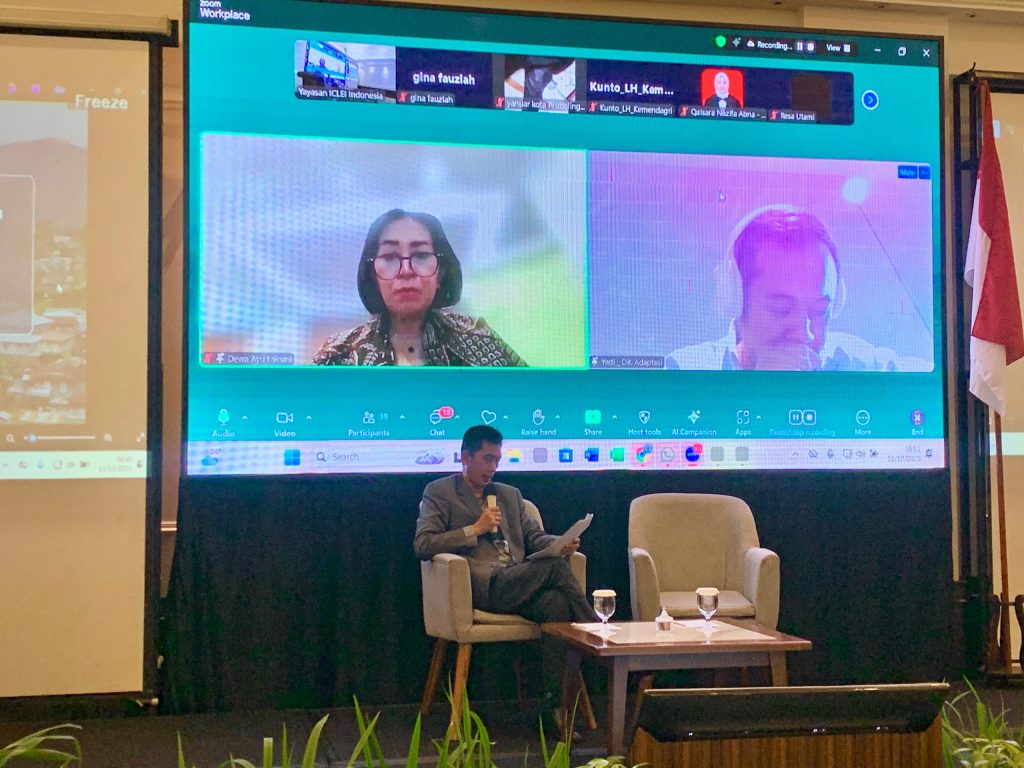
Selamet Daroyni, ICLEI Indonesia Senior Project Officer serving as the panel moderator (in-person, sitting), Dr. Dewa Ayu Laksmiadi Janapriati from the Ministry of Women’s Empowerment and Child Protection (via Zoom, left), and Yadi Suryadi fromthe Climate Change Adaptation Directorate of the Ministry of Environment (via Zoom, right) are seen responding to the Q&A session with LG participants during the panel discussion on 19 December 2025.
The first day featured a national panel discussion that highlighted the critical need for coordination between national and local governments.
Dr. Dewa Ayu Laksmiadi Janapriati from the Ministry of Women’s Empowerment and Child Protection underscored ongoing gaps in participation and gender-responsive budgeting, particularly in addressing the differentiated impacts of climate change on women and children.
Yadi Suryadi, representing the Climate Change Adaptation Directorate at the Ministry of Environment, stressed the importance of mainstreaming GEDSI into environmental and climate frameworks to ensure equitable adaptation.
Meanwhile, Kunto Bimaji, M.Si, Head of the Sub-Directorate of Environment from the Ministry of Home Affairs, highlighted that the integration of GEDSI into local development planning and budgeting are essential for strengthening policy coherence and implementation.
The panel concluded that building inclusive, climate-resilient cities requires strong national–local coordination, enhanced institutional capacity, and a systems-based approach.
Hands-on capacity-building: equipping local governments for inclusive climate
Participants during a workshop session where they were encouraged to understand vulnerability indicators through a GEDSI lens using participatory learning methods.
Building on the panel discussion, the second day of the program focused on practical capacity-building for local governments. Led by GEDSI expert Bahrul Fuad with facilitators from ICLEI Indonesia, the training engaged participants in interactive workshops, hands-on simulations, and group exercises. LGs worked through inclusive planning simulations, modeled vulnerability indicators through a GEDSI lens, and explored systems-based approaches to policymaking. Pre- and post-tests, quizzes, and reflection exercises enabled participants to immediately apply the knowledge in their city contexts.
By fostering such alignment between national policies and local implementation, as well as turning theory into practice, Indonesia’s local governments are taking tangible steps toward cities that are not only resilient to climate impacts but also equitable and inclusive for all communities.
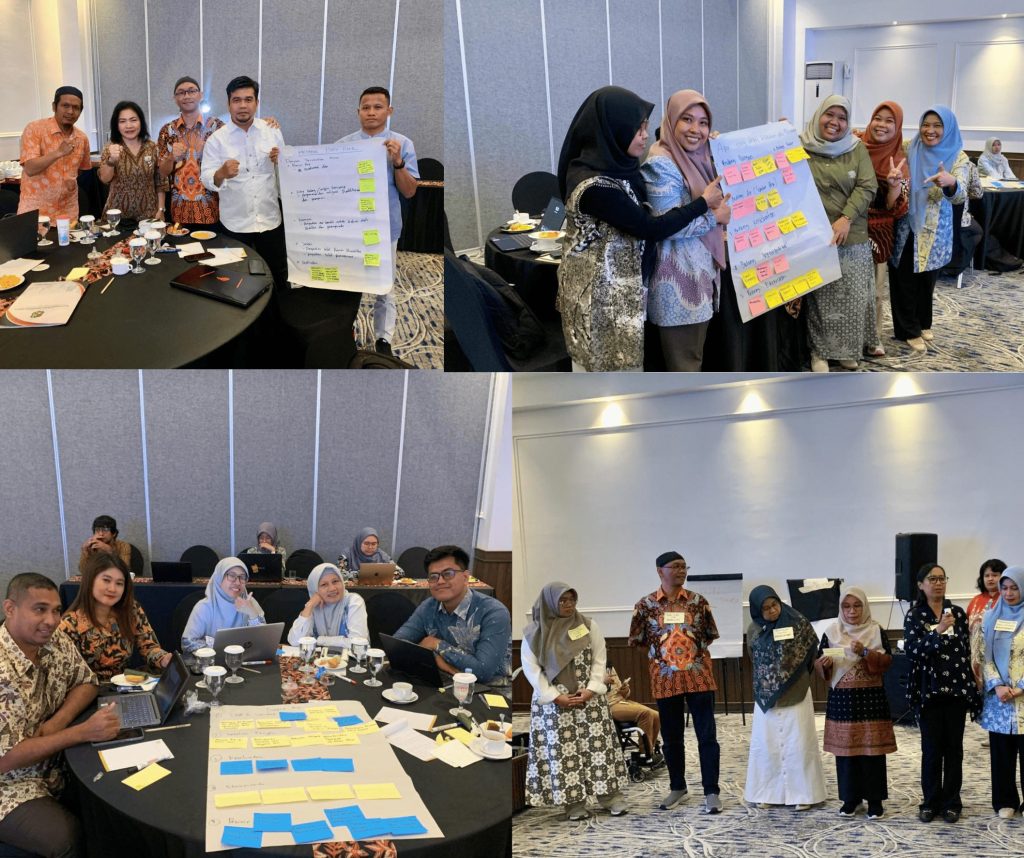
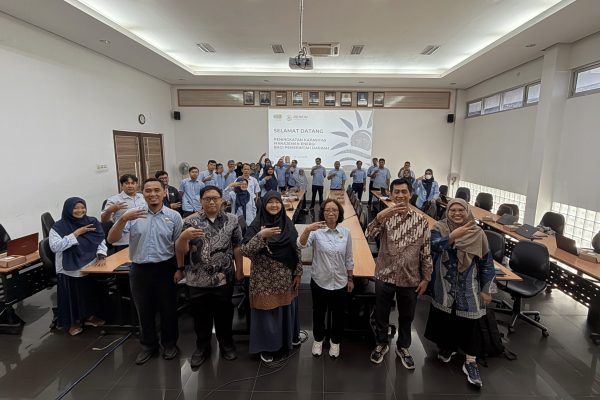
Participants from different cities are seen collaborating in a group exercise to share insights, identify city needs using a GEDSI lens in planning, and present their findings during Day 2.
SIRA’s 1st online training lays the foundation for understanding climate adaptation and disaster resilience
The SIRA project previously held its first online training on 7 October 2025, aiming to introduce key concepts in climate change adaptation (CCA) and disaster risk reduction (DRR). The session brought together 62 participants from 15 Indonesian cities, representing three key local agencies in each city: the Spatial Planning and Development Agency, the Environment Agency, and the Local Disaster Management Agency.
Highlighting its interactive approach, the training included pre-tests and post-tests to measure participants’ understanding of CCA and DRR. Significant gains were seen in understanding ecosystem-based adaptation, such as mangrove restoration. Participants also excelled in deepening concepts like DRR-adaptation integration, Building Back Better principles, and coastal resilience strategies.
All participants emphasized the need for deeper training on gender equality, disability, and social inclusion (GEDSI), underscoring the demand for inclusive climate action.
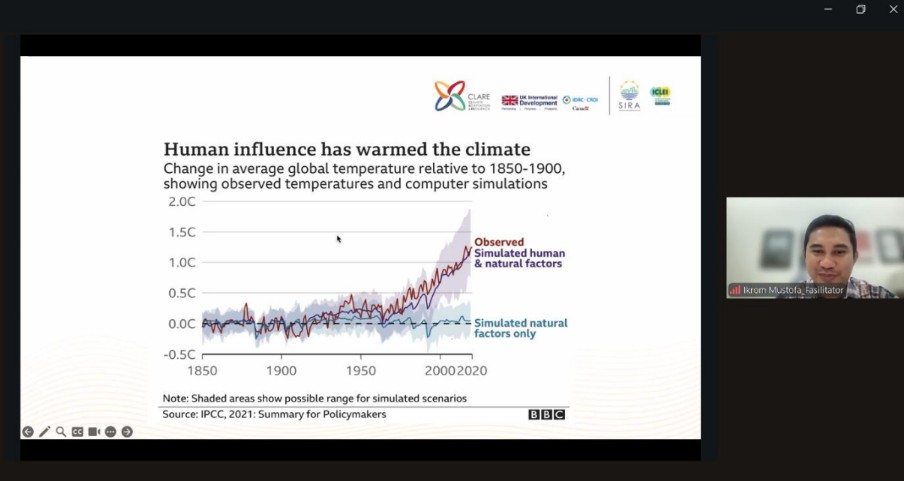
In the picture, Ikrom Mustofa, resource expert from Universitas Islam Indonesia, is presenting Session 1B: Global Climate Policy Landscape to local government officials virtually on 7 October.
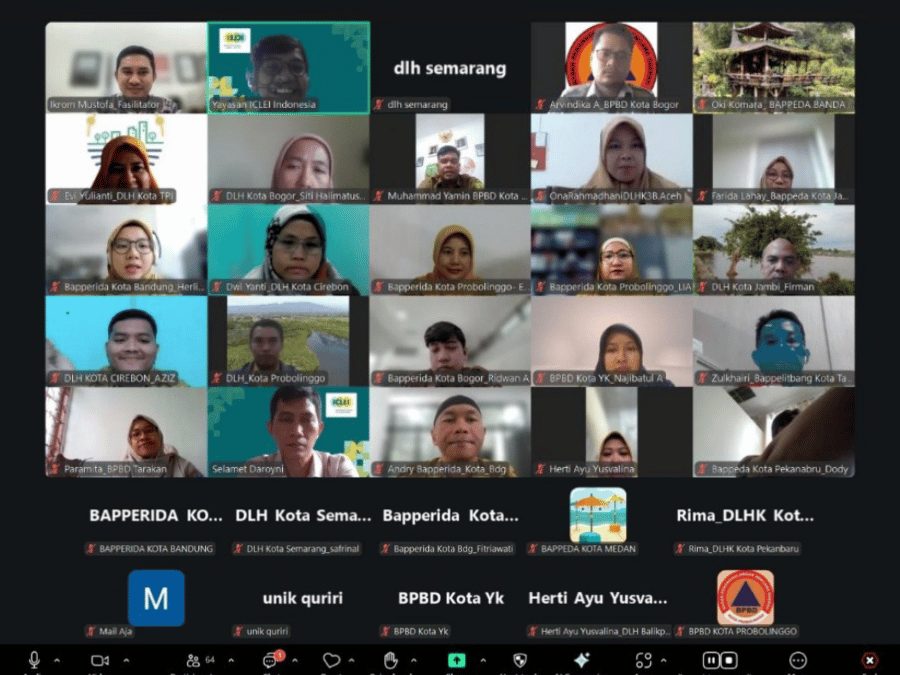
Participants are seen attending the real-time session with 64 local government staff, including organizers, with more than half of the participants being women, on 7 October 2025.